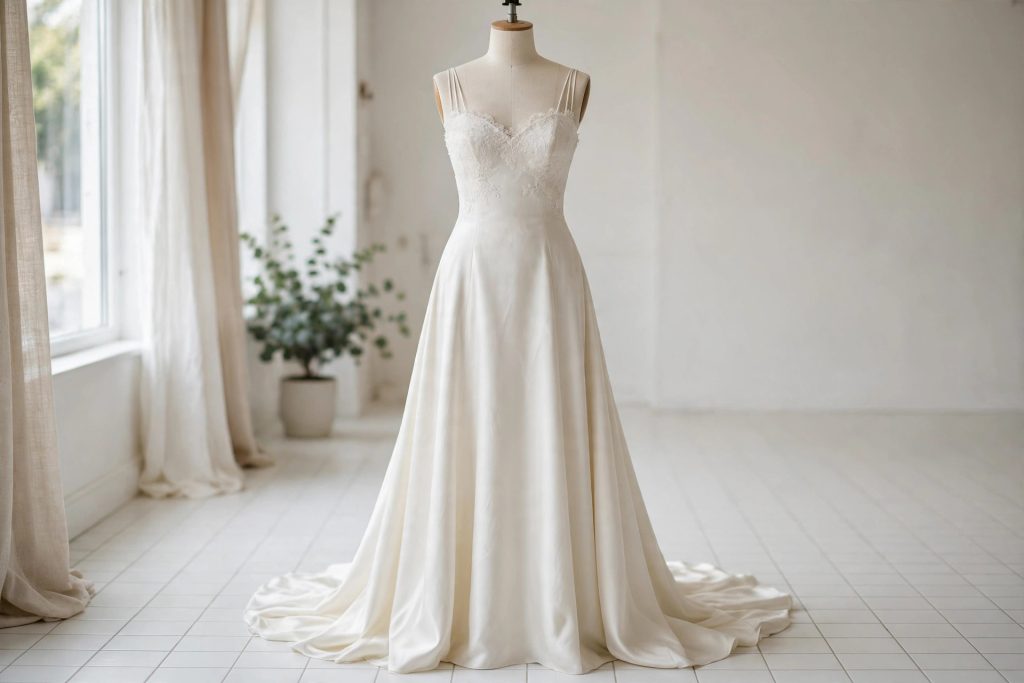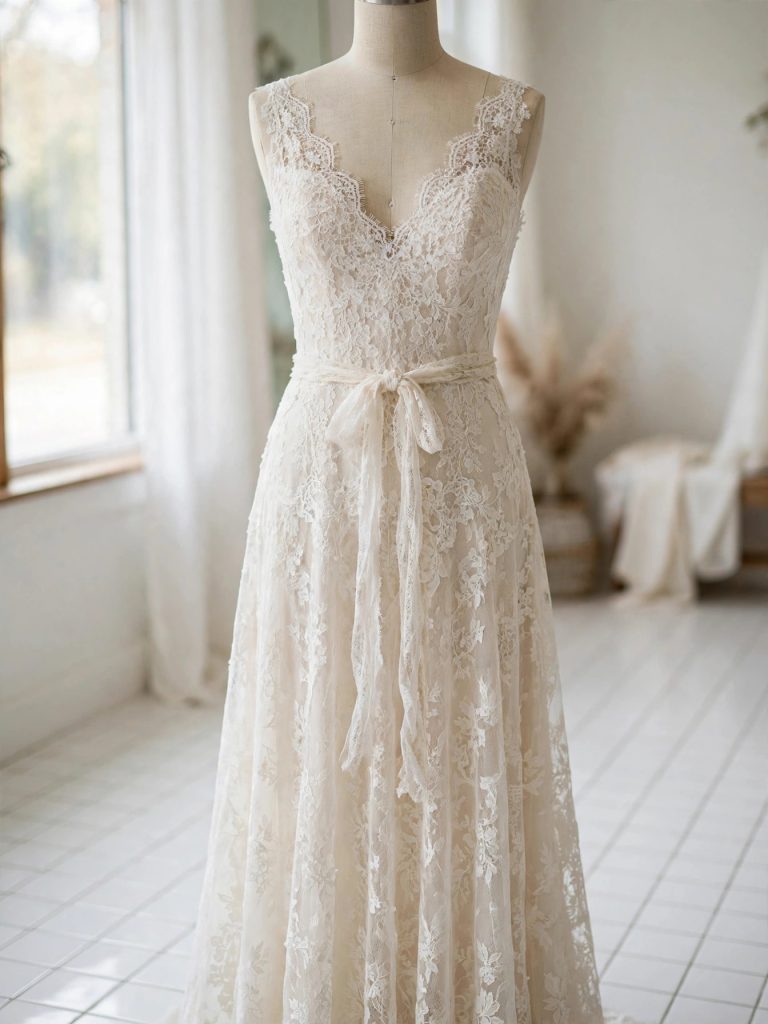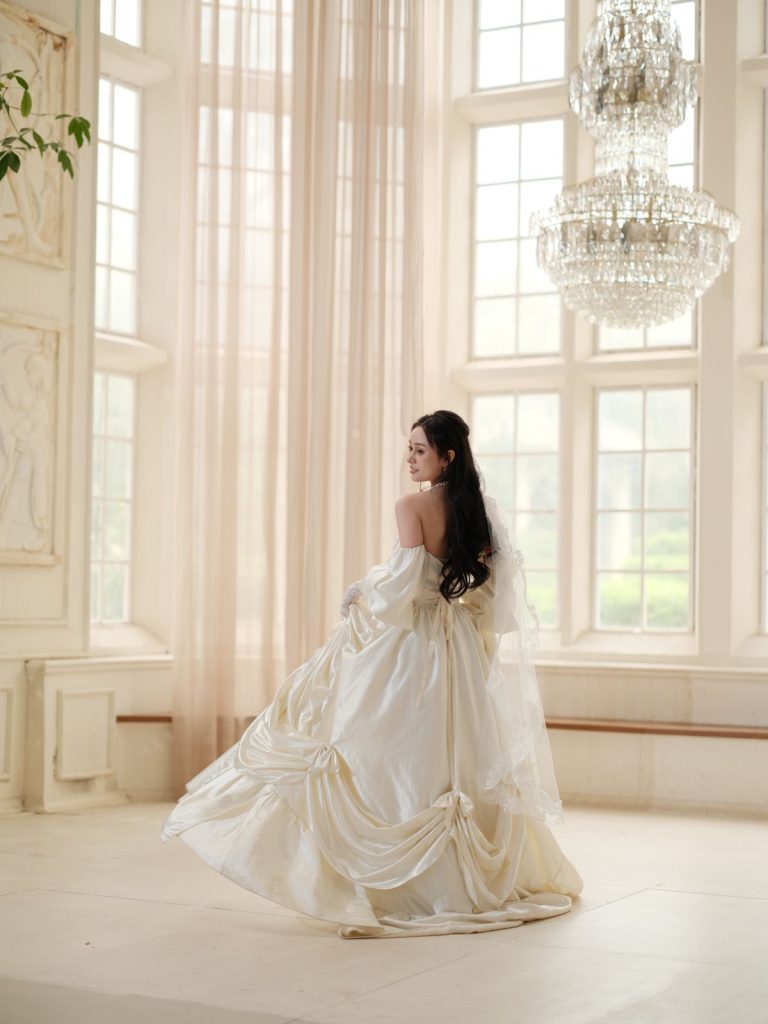
A corset wedding dress is well made when three things are right: the boning type, the eyelet reinforcement, and the panel construction. If those three pass, the gown will hold its shape through a full wedding day; if any one fails, no amount of beautiful lace on the outside will save it. This guide shows you — as a boutique buyer or brand owner — exactly how to judge corset construction before you commit to a bulk order, using the same checks factories apply on the production floor.
Why Is a Corset Wedding Dress Harder to Manufacture Than a Regular Gown?
Because a corset bodice is an engineered garment, not just a sewn one. A standard strapless bodice has about four panels and light interfacing; a proper corset bodice has six to eight shaped panels, ten to fourteen individual bones, a waist tape, and a reinforced lacing placket. That is roughly two to three times the cutting and sewing labor of a soft bodice, and every step has to be precise — a bone channel sewn even three millimeters off-center will twist the whole silhouette. This is why corset gowns generate a disproportionate share of bulk-order quality disputes: there are simply more places for a factory to cut corners, and the defects only show up when a real bride laces the dress tight. If you are new to how bridal gowns are actually built, our custom wedding dress manufacturing process guide walks through each production stage.
How Do I Check the Boning in a Corset Wedding Dress?
Ask one question first: steel or plastic? The answer determines the gown’s lifespan.
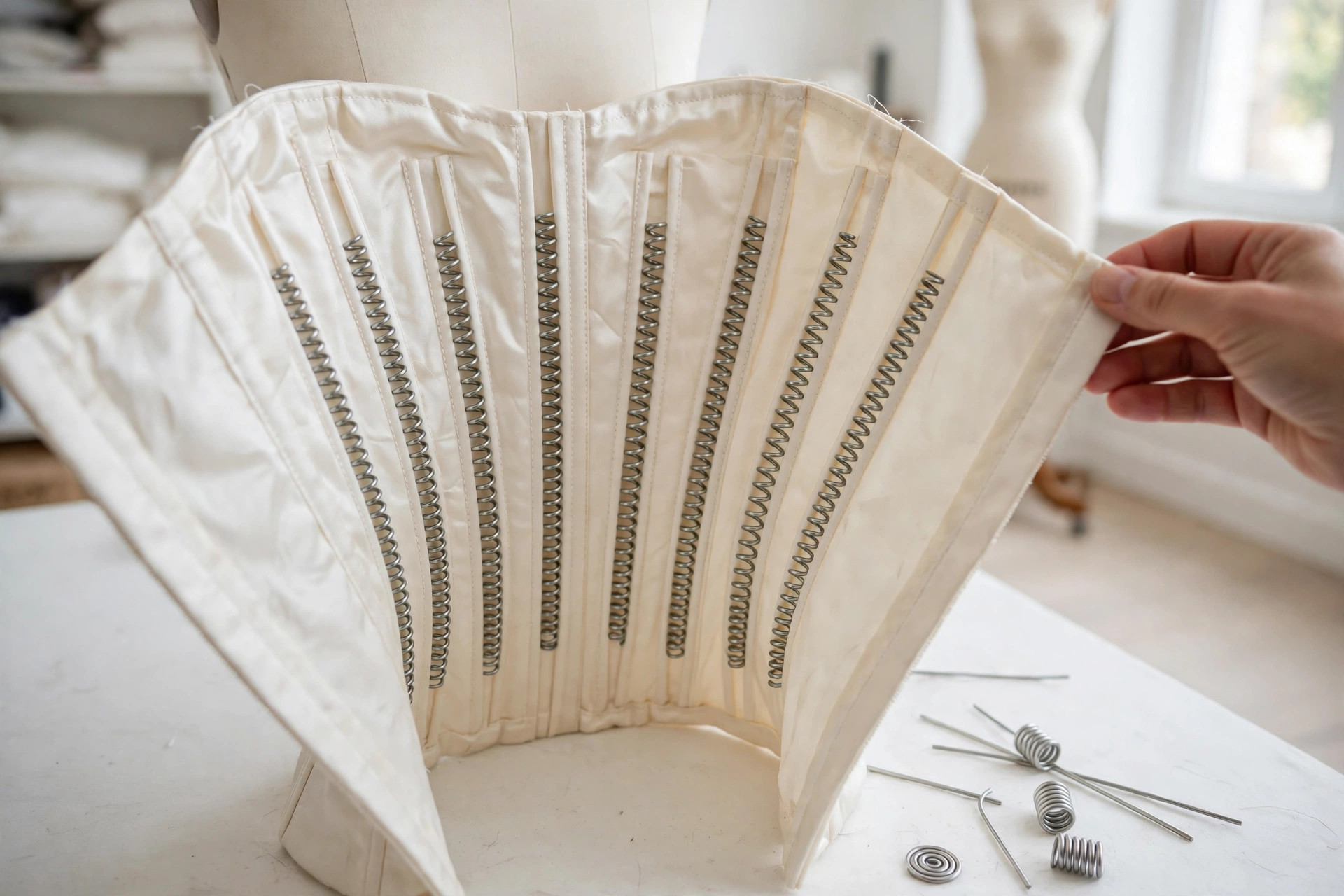
Spiral steel boning is the professional standard for bridal corsets. It flexes with the body, springs back to shape, and survives heat, humidity, and long ocean freight without deforming. Flat steel boning is stiffer and typically used at the center front beside the busk. Plastic boning (often called rigilene) is the budget substitute: it is cheap, light, and easy to sew — but it softens and warps in heat, which means a container shipped through a tropical port in summer can arrive with boning permanently bent into waves.
You can test a sample in ten seconds: gently bend a bone channel ninety degrees and release it. Steel springs straight back; plastic stays slightly kinked or feels rubbery. Also look at the channel stitching — each bone should sit in its own snug casing with two parallel stitch lines. Bones sharing one wide channel, or channels with wavy stitching, signal rushed production. When you receive a quotation, check whether the boning type is named at all; our guide to reading factory quotations shows how vague line items hide exactly this kind of substitution. A quote that just says “boning” without specifying steel or plastic deserves a follow-up question.
What Should a Good Lace-Up Back Look Like?
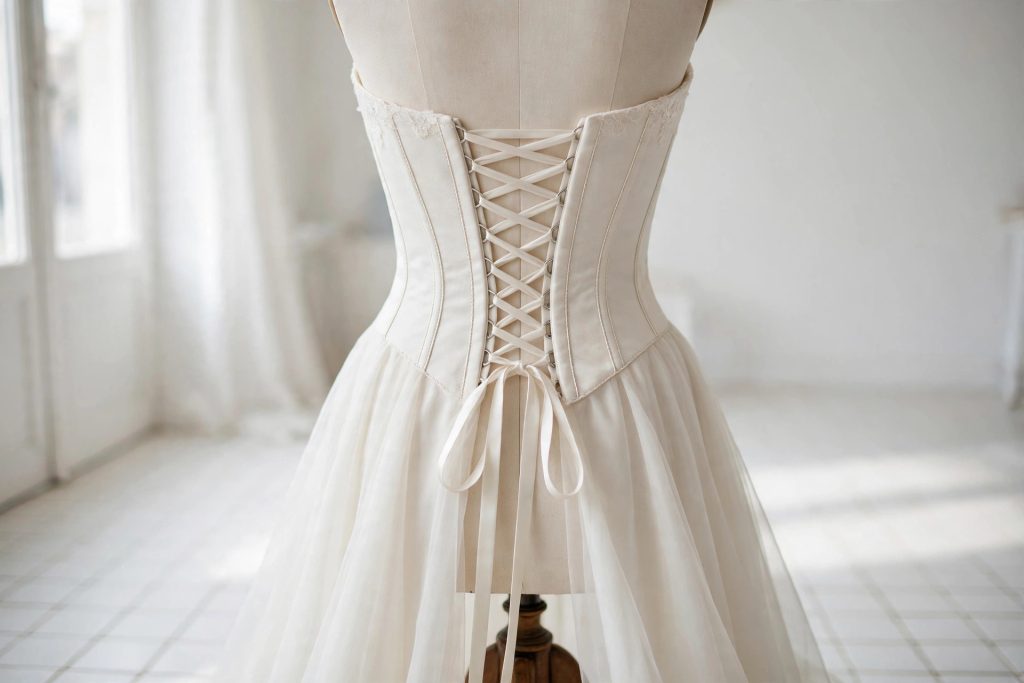
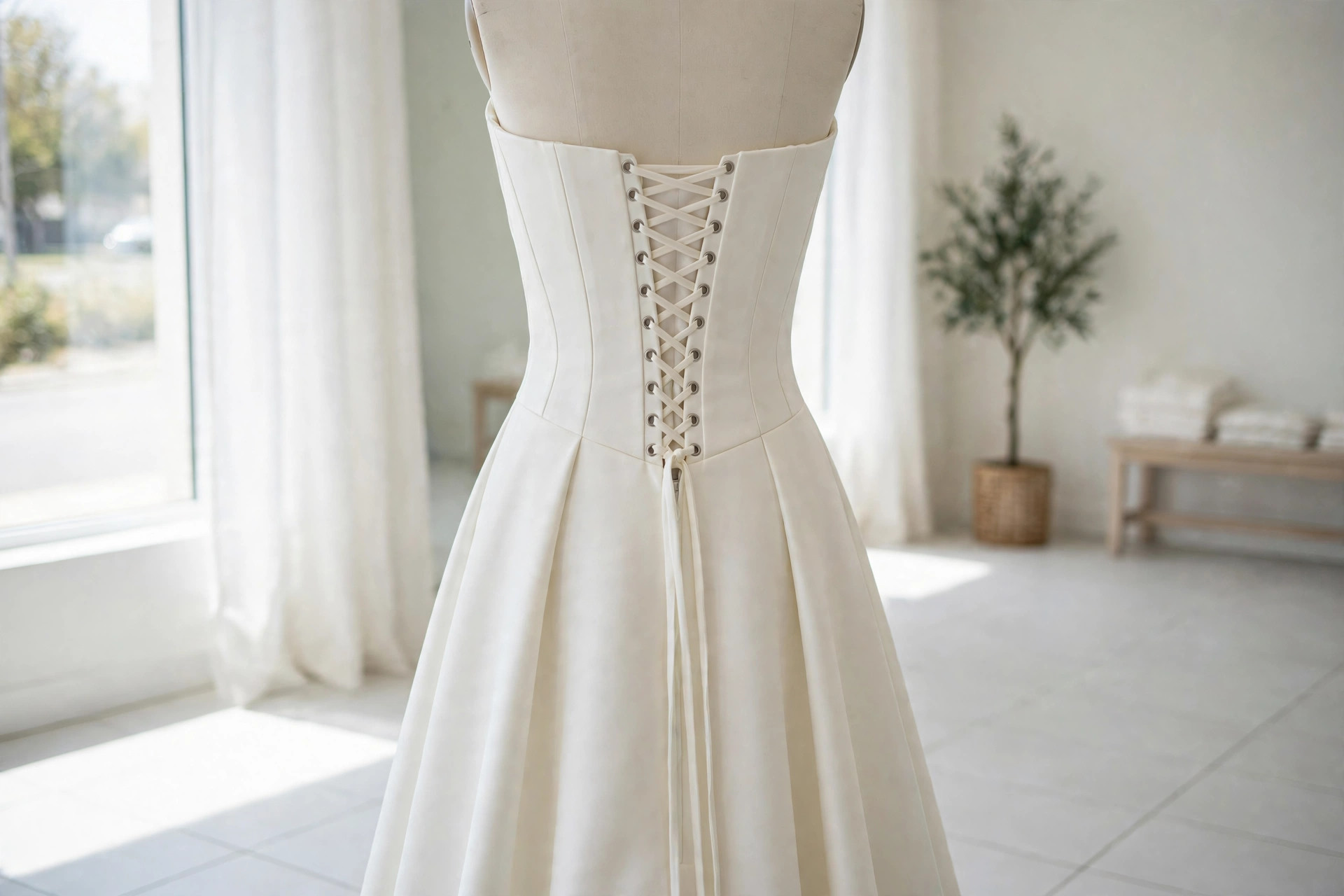
A good lace-up back has evenly spaced metal eyelets set into a reinforced placket — never punched straight through a single layer of fashion fabric.
Count the eyelets: a full-length bridal corset back typically carries ten to fourteen pairs. Fewer than eight pairs means the lacing cannot distribute tension evenly, and the dress will gap at the waist. Then look behind the eyelets: there should be a visible reinforcement layer — usually a strip of cotton twill tape or coutil sandwiched inside the placket. This strip is what actually holds the eyelets; without it, the metal rings tear straight through satin or lace under lacing pressure, which is the single most common bulk defect buyers report on cheap corset gowns.
Check the spacing with a ruler if you can: eyelets should sit roughly two centimeters apart, in a straight line, with no puckering around the holes. Puckering means the holes were punched before the fabric was stabilized, and they will enlarge with wear. Finally, look for the modesty panel — the fabric flap behind the lacing that keeps skin from showing through. A missing or skimpy modesty panel is a telltale sign of a cost-cut sample, and it is worth specifying in writing, because adding it later changes the pattern.
How Many Panels Should a Quality Corset Bodice Have?
Six to eight panels per bodice is the mark of proper corset construction; four panels is a shortcut.
Each curved seam between panels is a shaping opportunity: more panels let the patternmaker sculpt the bust, waist, and hip independently, which is what gives a corset gown its sculpted fit across sizes. A four-panel bodice forces one seam to do all the shaping work, so the fit is approximate — fine for a fashion top, risky for a gown a bride wears for twelve hours. Turn the sample inside out and count the vertical seams. While you are in there, look for a grosgrain waist tape sewn into the interior at the natural waistline. This hidden tape — not the outer fabric — is what bears the tension of the lacing and stops the bodice from stretching out. Factories that skip the waist tape save about fifteen minutes of labor per gown and create a dress that loosens as the day goes on. It is one of the first things experienced QC inspectors check; see our bulk order quality control guide for the full inspection sequence.
What Are the Warning Signs in a Corset Gown Sample?
Reject or revise the sample if you see any of these five defects, because all of them get worse — never better — in bulk production.
1. Twisted or migrating boning. If a bone has rotated inside its channel or pokes toward the seam, the channels are too wide or the stitching too loose. In bulk, this becomes bones stabbing through lining after a few wearings.
2. Uneven eyelet rows. Eyelets that wander off a straight line cannot be fixed by re-lacing; the placket was cut or punched off-grain.
3. Puckering around eyelets or along bone channels. This signals wrong thread tension or missing stabilizer, and it photographs badly — your brides will notice.
4. A busk that gaps or springs open. The front busk (the hook-and-loop steel closure) should lie flat when fastened. If it bows outward, the front bones are misaligned with the closure, and the whole front will not sit flat on the body.
5. Cups placed too high or too far apart. Built-in cups are positioned for the sample size’s proportions; if they sit wrong on the sample, grading to other sizes will multiply the error.
Document every defect with photos and written notes before approving anything. The sealed sample becomes your legal quality benchmark, so vagueness now becomes a dispute later — our breakdown of how long wedding dress sampling takes explains how to build revision rounds into your timeline.
How Do I Specify Corset Quality in My Tech Pack or Order?
Write the construction into the order itself — whatever is not written down will be decided by the factory’s cost pressure, not by your quality bar.
Name the boning type explicitly (“spiral steel boning, 6mm, in individual casings”), the eyelet specification (“two-piece metal eyelets, 5mm, spaced 2cm, set through reinforced placket with twill tape backing”), the panel count, and the stitch density (bridal corsetry typically runs 8–10 stitches per inch on structural seams). Add the waist tape, the modesty panel dimensions, and the busk length as separate line items. Then define acceptance criteria the same way you would for fabric: boning springs back after a 90-degree bend, eyelets withstand a firm tug without shifting, no puckering visible at arm’s length. Factories that build corsets properly will welcome this specificity — it removes ambiguity for their patternmakers too. Factories that planned to substitute plastic boning will suddenly revise their price upward, which tells you everything you need to know before signing. For reference on how material choices flow into cost, see our wedding dress fabrics guide.
Frequently Asked Questions
What is the difference between steel and plastic boning in a corset wedding dress?
Spiral steel boning flexes with the body and springs back to shape permanently; flat steel is used for rigid support at the front. Plastic boning (rigilene) is cheaper but softens and warps in heat, so gowns boned in plastic can arrive from ocean freight with permanently wavy boning. For bridal wear, steel is the professional standard.
How many panels should a quality corset wedding dress bodice have?
Six to eight shaped panels is the mark of proper corset construction, giving the patternmaker independent control over bust, waist, and hip shaping. Four panels is a shortcut that produces an approximate fit. Turn the sample inside out and count the vertical seams to verify.
Why do the eyelets pull out on cheap corset wedding dresses?
Because the eyelets were punched through a single layer of fashion fabric with no reinforcement behind them. Proper construction sandwiches a strip of twill tape or coutil inside the lacing placket, and the eyelets grip that reinforcement layer. Without it, lacing tension tears the metal rings straight through satin or lace.
How much more does a well-constructed corset wedding dress cost to manufacture?
Expect a meaningful premium over a soft bodice: steel boning, individual bone casings, a reinforced placket, waist tape, and six to eight panels roughly double to triple the bodice labor. The exact gap depends on design complexity, but any quote priced like a simple strapless bodice is a signal that corners are being cut somewhere structural.
Can I request specific boning in a custom wedding dress order?
Yes — and you should. Name the boning type, channel construction, eyelet size and spacing, panel count, and stitch density in your tech pack or order sheet. Reputable manufacturers welcome the specificity; if a factory pushes back or the price jumps sharply, it reveals what was originally planned.
What should I check first when a corset gown sample arrives?
Start with the three structural checks: bend-test the boning (steel springs back, plastic kinks), tug an eyelet firmly (it should not shift or pucker the fabric), and count the interior panels (six to eight). If those pass, move on to fit, finish, and fabric. Document everything with photos before approving the sealed sample.
OEMOD Factory is a Guangzhou-based wedding dress and women’s apparel manufacturer offering wholesale and private-label corset gown production for bridal boutiques and retailers worldwide. Browse the wholesale wedding dress catalog or contact us to discuss your corset designs.