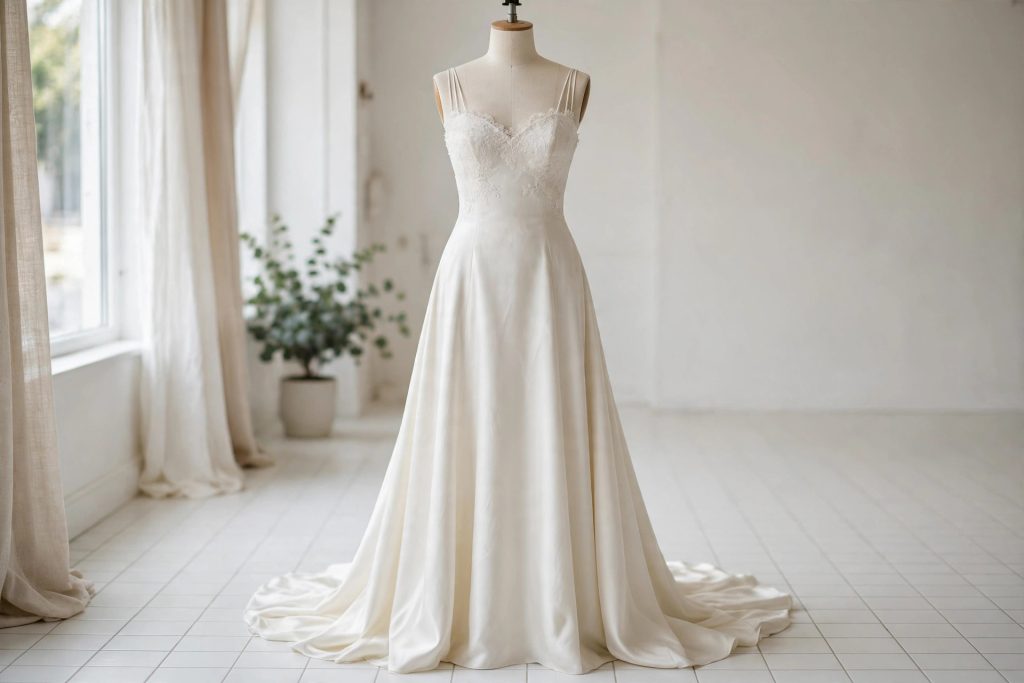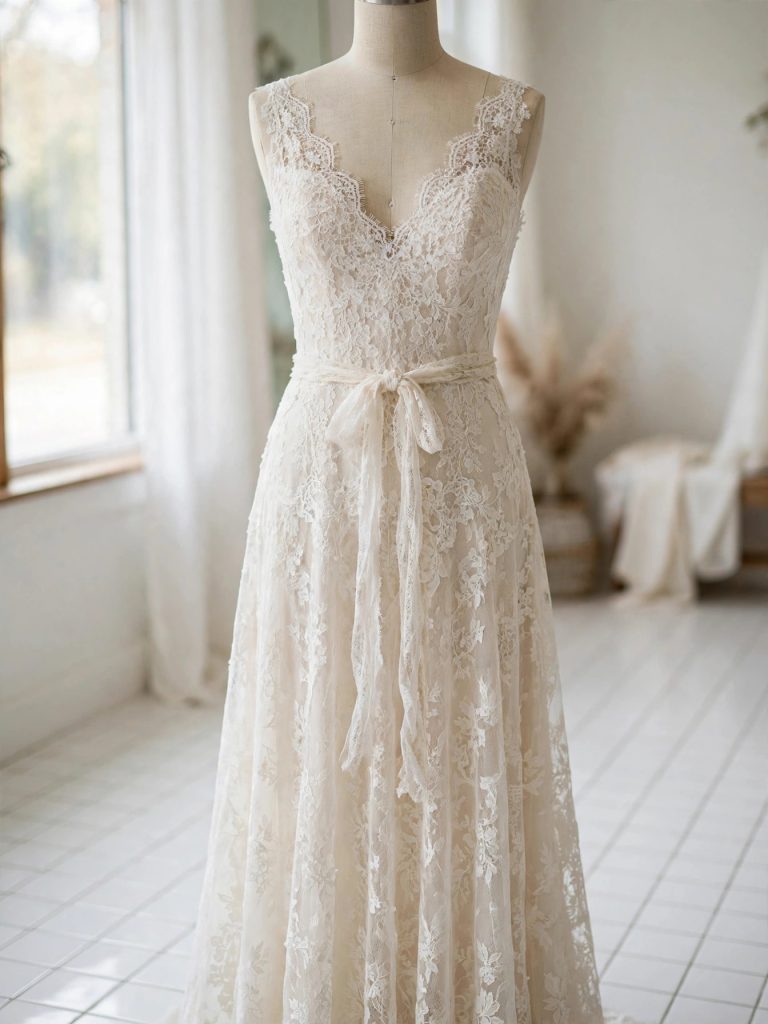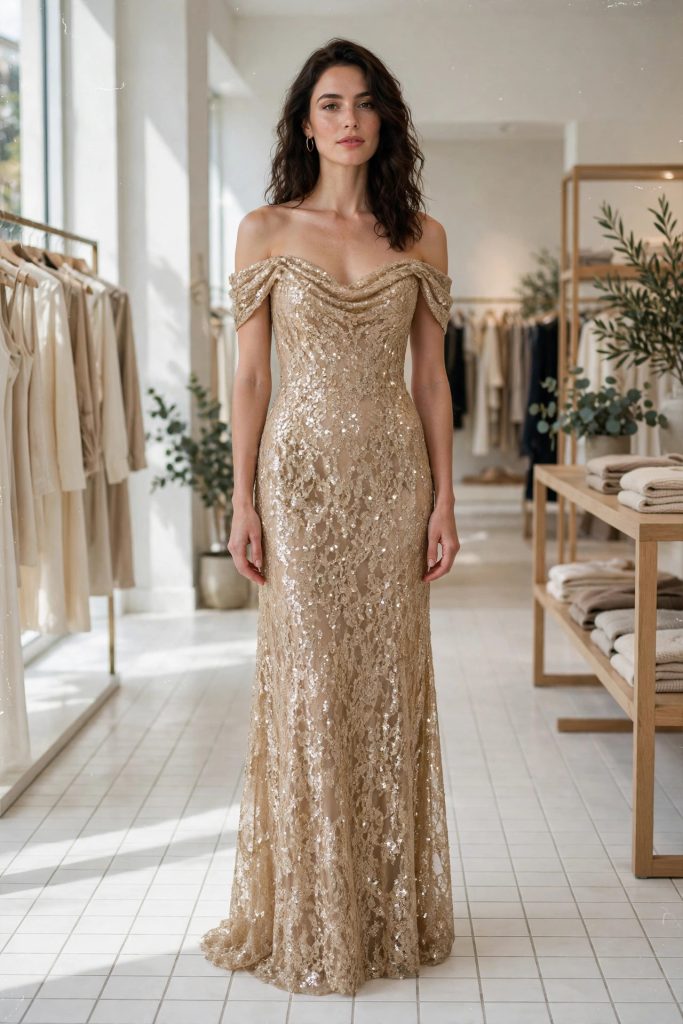
The rejection came after everything. That is where I want to start, at the end, with a finished off-shoulder sequin lace gown already boxed, already labeled, already counted into a shipment — and a buyer opening one carton, running a thumb across the bodice, and watching sequins and bead centers come away on her skin like the dress was shedding. She sent a photograph. Production sent back a photograph of the sample, perfect, dense, correct. Both photographs were honest. The dresses in them were not the same dress in any way that mattered, and the argument about this Miusol-style gown — off the shoulder, sequin lace, the kind of piece a bride finds by typing wedding dresses near me at midnight — was really an argument about what happened between the sample and the bulk, step by step, backwards.
I have supervised lines and QC long enough to know where shedding is born. Work backwards with me. Before the boxing there was pressing. Beaded and sequined panels cannot take full heat; steam will melt beads and lift sequin finishes, so pressers work low heat under a pressing cloth, which adds something like 20 minutes a gown and never appears in anyone’s costing. Before pressing there was the final QC pass. A beaded bodice carries a rework rate of 12 to 18% after the first QC pass, mostly loose bead centers that have to go back to a bench. On the sample, the tug test is real: a 3-kilo pull on each flower and sequin cluster, every one. In bulk, the same test gets spot-checked one in twenty. One in twenty is not a test of the production. It is a test of the odds.
The shedding started at the thread order, months earlier
Before QC there was the sewing, and before the sewing there was a thread decision that nobody wrote down. Beading thread and regular polyester thread are not interchangeable, whatever the purchasing sheet says. Regular thread snaps under bead weight, slowly, invisibly, and it is the usual cause of what buyers call mystery shedding two to four weeks after delivery — the same window where the one-star reviews for sequined and beaded gowns cluster, beads falling off at the top of the complaint list, posted just late enough that the factory has already been paid and the bride has already been photographed. The gown did not fail at the wedding. It failed at a purchasing desk, when somebody saved a small amount of money on thread.
Before the thread there were the beads themselves, and beads have tiers that buyers are rarely shown. Glass beads carry their color through the material. Dyed plastic beads carry it on the surface, and the dyed ones bleed color onto ivory satin under steam — there is a damp white cloth rub test for exactly this, rub the beading with a wet white cloth and see what transfers. It takes ninety seconds. On the sequin lace order that ended in photographs, I cannot tell you the rub test happened, because on squeezed quotes it is one of the first things to quietly stop happening. Glass bead prices, the Czech and Japanese material, roughly doubled since 2021. Most workshops switched to acrylic. The tech pack, in most of those workshops, still says glass, because nobody updated it, because updating it would start a conversation about price.
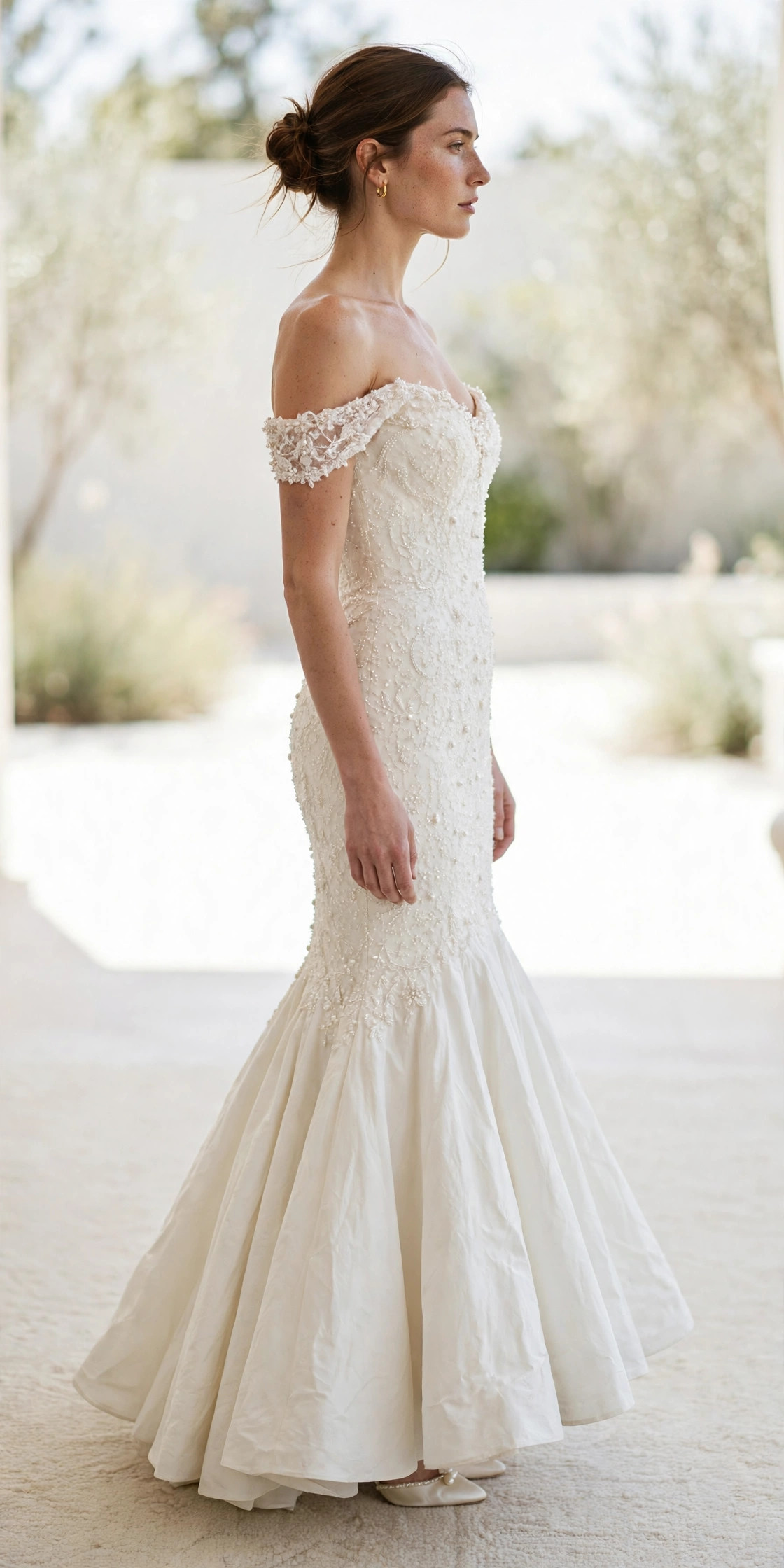
Hand-finished is the word that ends the argument and starts the problem
Before the beads there was the appliqué, and this is where the sample and the bulk formally divorced. A hand-sewn 3D floral appliqué bodice, bead centers and all, runs 6 to 9 hours a gown, 40 to 80 flowers a bodice, a dozen or more anchor stitches per flower. Machine-tacked work uses 3 anchor stitches a flower. Hand-sewn survives twenty-plus gentle wears. Machine-tacked survives about five. Buyers ask for a hand-beaded look at machine-beaded prices — they ask on nearly every order, in nearly those words — and the compromise phrase that walks out of that negotiation and into the tech pack is hand-finished. Hand-finished means whatever the workshop needed it to mean that month. Workshops buy pre-beaded flowers by the hundred from appliqué vendors when a quote gets squeezed, and the flowers arrive beaded by hands that were never in the building, at stitch counts nobody counted.
Before the appliqué there was the broken-needle problem, which is my favorite piece of factory knowledge and the one nobody outside a beaded line believes. When a needle breaks on a beaded panel, the panel goes through the needle detector, and a lost 2-millimeter tip cannot be distinguished from glass beads on the scan — the beads and the steel read the same. The panel is quarantined until the tip is found by hand. By hand means a person, a magnet, and patience, while the line waits. Peak season on beaded work means piece-rate benches running 10 to 12 hour days, and speed rising while stitch counts fall, and a quarantined panel in March is a panel somebody is tempted to clear with a wave. I have never waved one through. I have stood next to people deciding whether to, and the deciding took longer than the search would have.
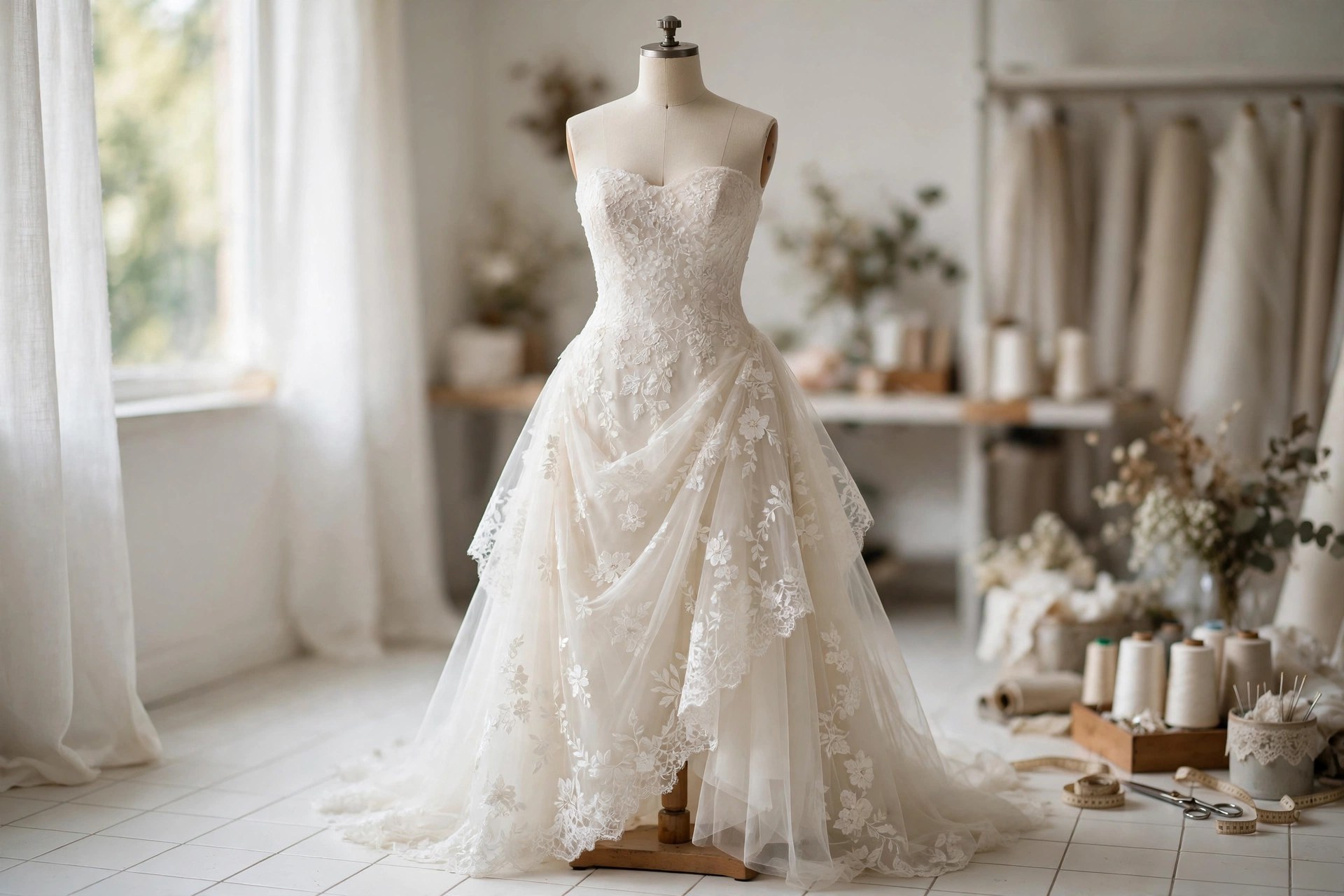
And before all of it — the thread, the beads, the appliqué, the needle — there was storage, the step nobody costs. Beaded gowns wait for shipment hanging, and a beaded bodice on a narrow hanger stretches under its own weight. Flat storage or wide hangers, that is the rule, and the pre-shipping stretch it prevents is the stretch a bride’s fitter later charges to fix while blaming the size chart. The size chart was innocent, mostly. No wait, that is too easy. The size chart on that order was not innocent; it was copied from a different gown with a different bodice, which is its own story, and the stretch and the chart shared the blame in proportions I still cannot divide cleanly, years later, with both photographs in front of me.
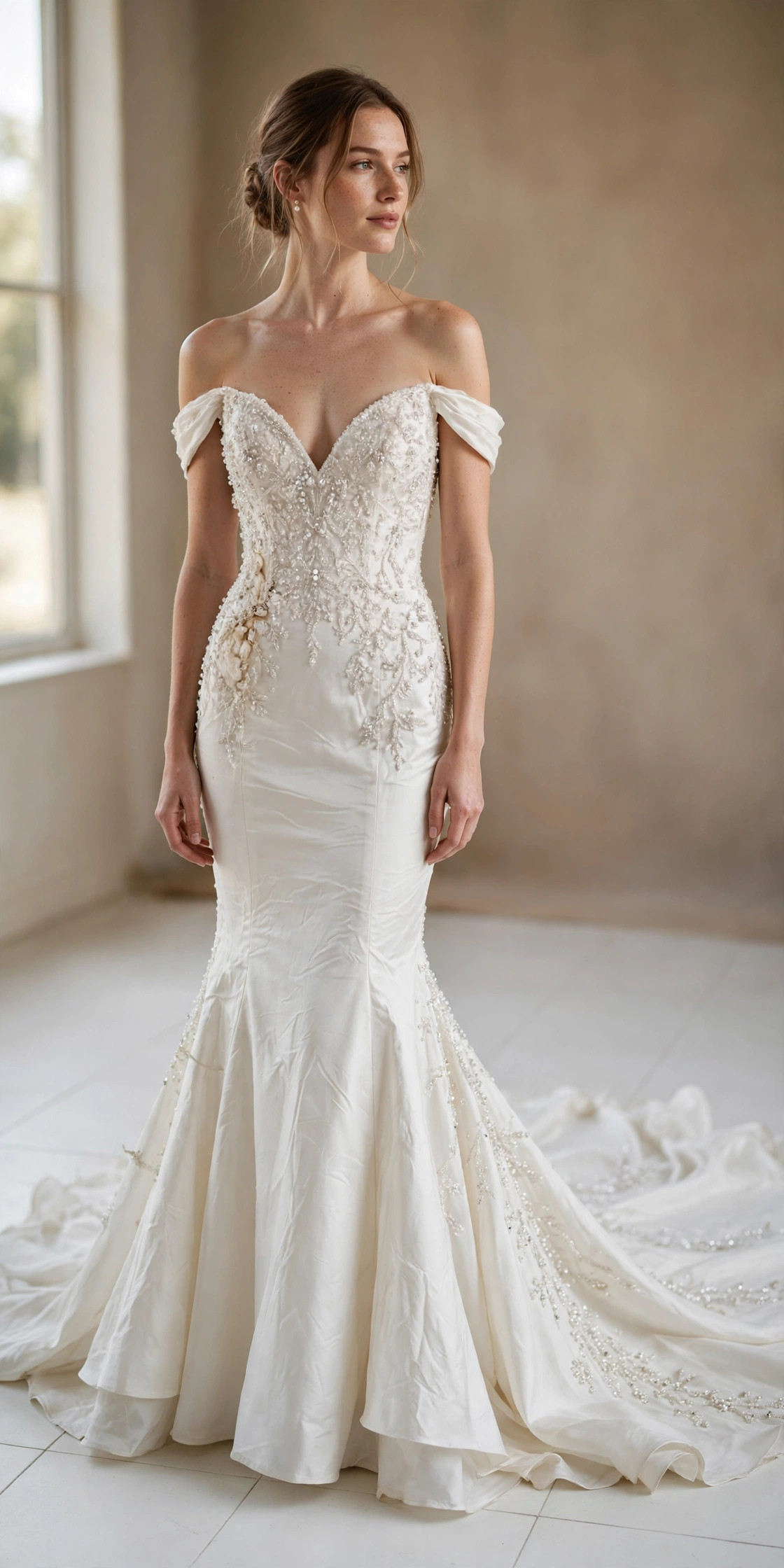
So start again at the beginning, the way the order actually ran. A bride-facing listing for an off-shoulder sequin lace wedding dress converts on sparkle density. The sample gets made dense, hand-sewn, glass-beaded, tug-tested flower by flower. The quote gets negotiated against that sample by people who have never watched a bench. The workshop protects the quote the only way it can, in the places the buyer cannot see in a photograph: thread, bead tier, anchor stitches, a rub test skipped, a spot check at one in twenty. The bulk ships. The gown sheds at week three, on a dance floor, in photographs that will outlive everyone who argued about the thread order. The bulk was not a worse dress than the sample in the factory’s mind. It was the same dress at the price the buyer insisted the sample should cost, and those two sentences are the whole tragedy of sequin lace at wholesale, told in either direction. Anyone who wants the longer version of how bulk orders drift from samples should read how quality control on bulk wedding dress orders actually gets staffed, and then look at a line like the beaded sequin mermaid gown and ask which of its photographs was taken at one-in-twenty odds. The question answers itself, which is why nobody in the building asks it out loud.
Questions buyers actually ask out loud
The sample was dense and the bulk sheds sequins at week three. What actually changed?
Usually the thread and the anchor count changed, because regular polyester thread snaps under bead weight where beading thread holds, and machine-tacked appliqué sits on about 3 anchor stitches a flower against a dozen or more for hand-sewn work. Shedding at two to four weeks is the signature of exactly that substitution, and it shows up in reviews on the same delay. The sample was not a lie, exactly. It was a hand-sewn object quoted as if it were a machine one, and the difference had to come out somewhere, so it came out on the dance floor, which is where it always comes out.
Ninety seconds for a rub test. Why would a factory skip it on an ivory order?
Because the rub test is how you catch dyed plastic beads bleeding color onto ivory satin under steam, and on a squeezed quote it is one of the quiet steps that stops happening — glass beads roughly doubled in price since 2021 and most workshops moved to acrylic without updating the tech pack. Skipping the test does not cause the bleed. It causes the bleed to be discovered by a bride instead of a QC bench. I would rather a buyer asked about the rub test by name than asked about almost anything else on a beaded order, and almost no buyer knows the test exists, which is the actual problem wearing a small disguise.
One in twenty gets the tug test in bulk. Is the other nineteen unchecked?
The other nineteen get a visual pass, and a visual pass does not find a loose bead center, which is why beaded bodices come back from first QC with a 12 to 18% rework rate even before anyone spot-checks the rest. The sample gets a 3-kilo pull on every flower cluster. Bulk gets the pull on one gown in twenty and the odds do the remaining work. If your order is small, the honest move is paying for 100% tug testing and watching the per-unit price barely move, because the test is minutes per gown. The lines that refuse are telling you something about the other nineteen, and it is not something you want translated.
Hand-finished is written in my tech pack. What did I actually buy?
You bought a phrase that ends negotiations, and it can mean hand-sewn appliqué at a dozen stitches a flower or vendor-bought pre-beaded flowers tacked at three. Hand-beading a full bodice runs 6 to 9 hours a gown; nobody sells those hours at a machine price and stays in business. Ask which it is, in writing, with a stitch count, before the deposit rather than after the shedding. I get asked this after deliveries, never before, and before is the only time the answer can change anything, which I suppose is why the phrase survives. It is a comfortable phrase. It comforts everyone until week three.
The buyer from the boxed-carton photograph still orders sequin lace. She specifies beading thread now, and a stitch count, and she pays for the rub test like it is a line item, because for her it is one. The factory still makes her gowns. Somewhere in a workshop there is a sample with perfect dense beading that has been shown to a hundred buyers, and I think about that sample the way you think about a photograph of someone young — everything in it is true, and nothing in it is the whole story, and the distance between the two is where I have spent my working life, one anchor stitch at a time.