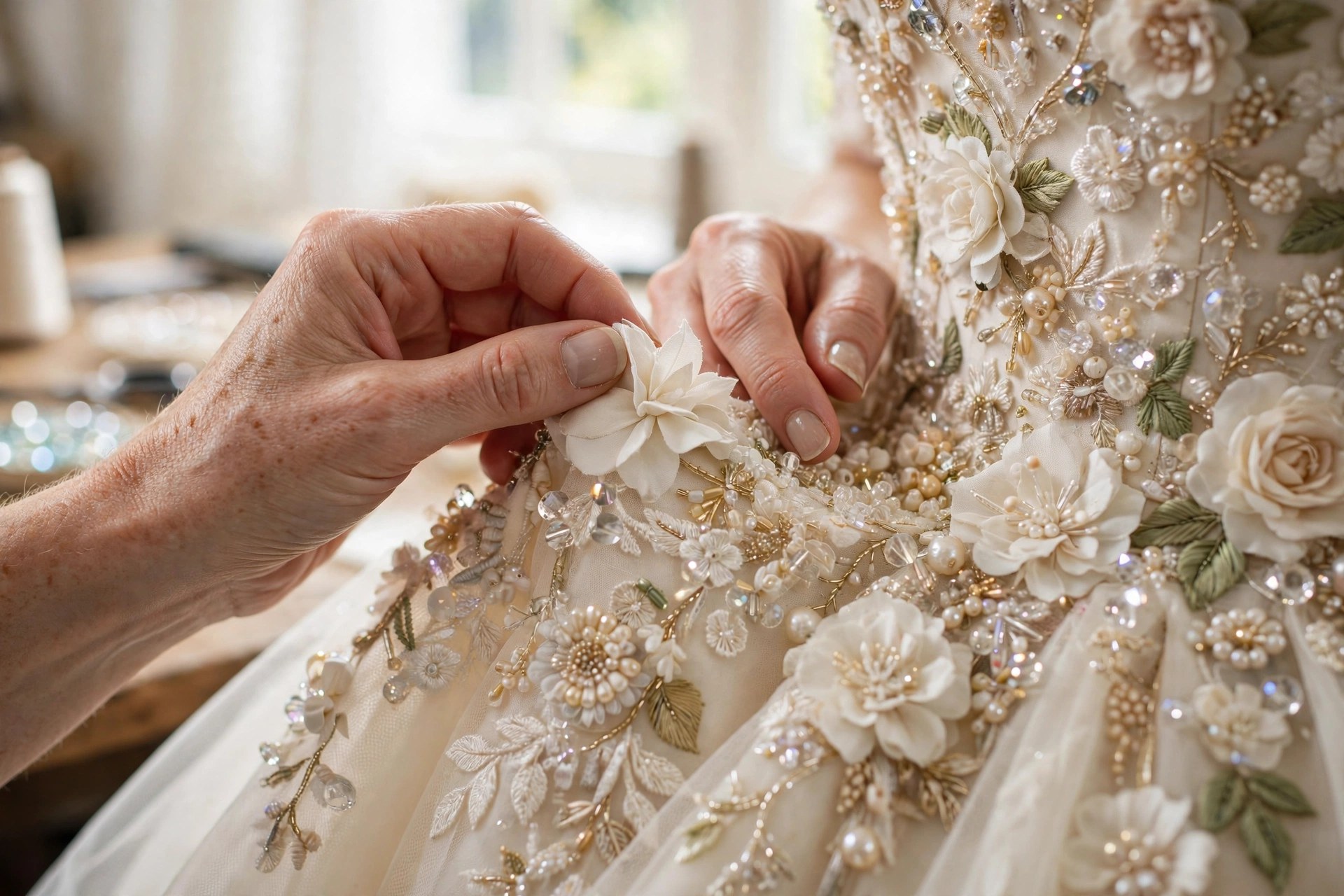
Nine hours. That is the handwork inside one properly beaded 3D floral bodice on a quinceanera dress, and the wholesale price on the order was one hundred eighty dollars. Somebody priced the satin, the tulle, the zipper, the carton, and left the nine hours out of the math, or left them in and hoped nobody would check. By April the beads were coming off in customers’ hands.
The calls start every April. Same month, same complaint about quinceanera dresses, same silence on the other end when I ask what the tech pack said about the beading. The tech pack always says “hand-finished,” and that one word is the whole story. Somebody’s hands touched the gown, which does not mean nine hours of work and does not mean twelve stitches per flower. It means the price stayed at one eighty and the beading went wherever beading goes when there is no money for it.
I am QC. Or I was, for longer than I care to count, on nobody’s side in particular. My job was the table at the end of the line where the gowns came for the last look before the carton. Beaded bodices taught me everything I know about the difference between a sample and a shipment, which is to say they taught me that the sample is a rumor and the shipment is the news.
The $180 quinceanera dress and the nine hours nobody priced
Walk it backward from April. The buyer wanted a beaded princess gown with 3D flowers for the quince season, the kind of quinceanera dresses that photograph like money. The quotation came back at one eighty and the buyer pushed, because buyers push, and the factory said yes, because factories say yes. Somewhere in that yes, the nine hours died. Nobody announced it. The tech pack just said “hand-finished” and everyone moved on.
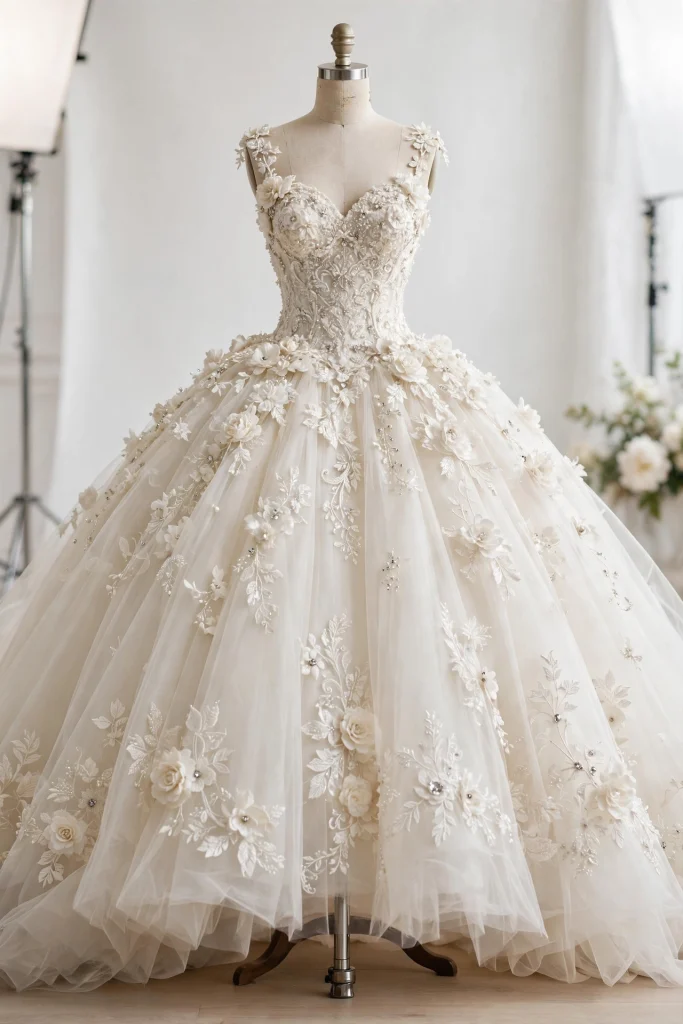
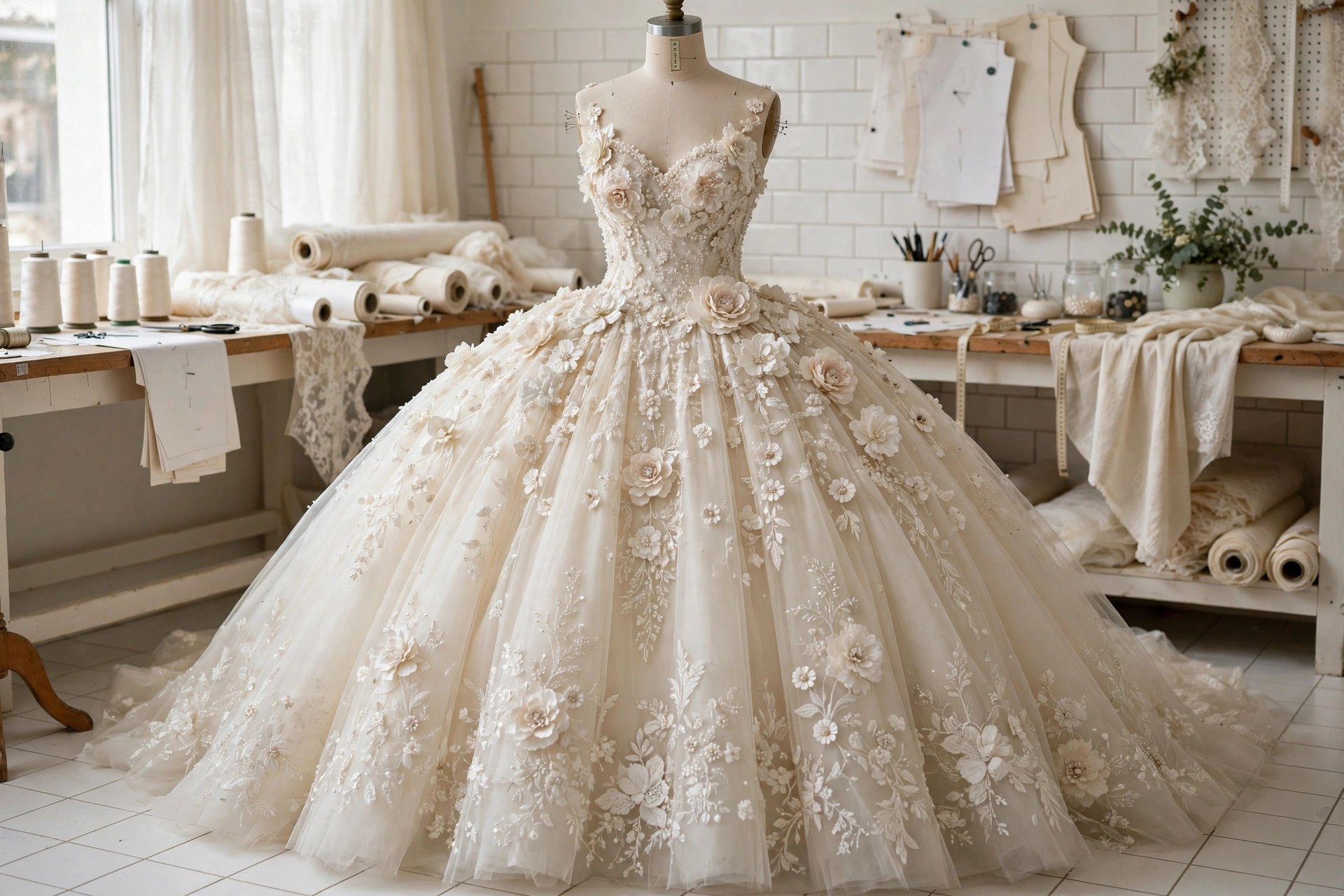
The sample was honest. I will give them that. The sample room beaded it by hand, twelve or more anchor stitches per flower, and it passed the tug test I gave it, three kilos on every cluster. The sample is the only gown in the whole order that ever gets the full treatment. It has to. The sample 3D floral ball gown is what the buyer photographs, approves, and remembers. The bulk is what the buyer receives, and the bulk was never going to see nine hours at one eighty.
Here is what the workshop does instead, and I have watched the menu get picked from often enough to recite it. Option one, buy pre-beaded 3D flowers by the hundred from an appliqué vendor and tack them on. Option two, machine-tack the flowers at three anchor stitches apiece. Option three, both. The pre-beaded flowers are not bad flowers. They are just somebody else’s flowers, made for somebody else’s price, and three stitches hold through the fitting and the photographs. The photographs are the product, as far as the order is concerned. Everything after the photographs is the customer’s problem.
Nobody photographs the stitches.
The rework numbers tell you how thin it gets. Twelve to eighteen percent of beaded bodices on quinceanera dresses come back for re-beading after the first QC pass, and it is almost always the bead centers, the little knots that take the weight. On a properly beaded gown that number is under five. The twelve to eighteen is the sound of three stitches trying to do the work of twelve. I log it, I send it back, the line re-beads the centers, and the gown ships. The rework fixes the gown in front of me. It does not fix the two hundred behind it.
Three stitches or twelve
There is a way to read a 3d floral ball gown the way I do, and it takes about ninety seconds. I turn the bodice inside out and count the anchor stitches on the back of three flowers. Twelve or more and somebody was paid by the hour. Three and somebody was paid by the piece. Then pull one flower gently, not hard, the way a fifteen-year-old will pull it without thinking when she sits down in her beaded princess gown. If the whole cluster shifts, the gown was built for the hanger, not the party.
The broken needle is the part nobody outside the line ever hears about. A needle snaps during beading, which happens, and the panel goes to the detector. Here is the thing about beaded panels and needle detectors. A lost two-millimeter tip reads exactly like a glass bead. The machine cannot tell them apart. So the panel sits in quarantine while somebody goes through it by hand, flower by flower, looking for a piece of steel among the beads. On a plain satin panel a broken needle costs ten minutes. On a beaded bodice it costs the afternoon, and in peak season the afternoon is the most expensive thing in the building.
That quarantine is one of the three things I know that the buyer never will. The second is the stitch count, which I already told you. The third is the rub test, and the rub test is the one that makes buyers angriest, because it feels like a trick and it is not a trick at all.
The things that fail after the photo
Glass beads cost what they cost, and since the bead prices roughly doubled, most workshops switched to acrylic without updating anything on paper. Acrylic is fine until it is dyed. Dyed beads bleed under the steam press, and the press is where a 3d floral ball gown goes right before packing. The test is a damp white cloth, rubbed hard on the beadwork. If the cloth picks up color, the beads will pick up the satin. I do it on every bulk lot. I have never had a buyer ask me to do it. Buyers always ask about the bead count, but the bead count is the distraction and the bleed is the problem.
The steam itself is a separate negotiation. Beads melt at high heat, so the pressers are supposed to use low heat and a pressing cloth, which adds twenty minutes per gown. In March, with the quince rush on and a thousand quinceanera dresses waiting, twenty minutes per gown is a number nobody wants to hear. So the heat goes up, the cloth stays folded on the shelf, and a percentage of the beads come out slightly deformed, just enough that the light catches them wrong. Not melted. Just wrong. The customer sees it in the fitting room mirror and calls it cheap. She is not wrong.
Then the thread. Regular polyester thread snaps under bead weight, slowly, over days of movement. That is the mystery shedding, the beads found in the garment bag two weeks later with no visible damage to the gown. Beading thread exists for exactly this reason. It costs more and it sews slower, which is why the bulk so often gets the regular thread. No wait. The thread wasn’t the problem on that April run. The thread was fine. The stitches were the problem, three where twelve should have been, and I keep having to remind myself to check the count before I blame the material. Old habit. The material is the easy accusation.
Storage does the rest before the gown ever ships. Beaded bodices go on narrow hangers in the packing room because narrow hangers are what the packing room has, and the beadwork stretches the bodice under its own weight. By the time the carton opens, the neckline sits a half inch lower than the sample. Nobody measures it. The customer feels it and calls it a sizing issue. It is a hanger issue, and it happened before the gown left the building.
The one-star reviews already knew
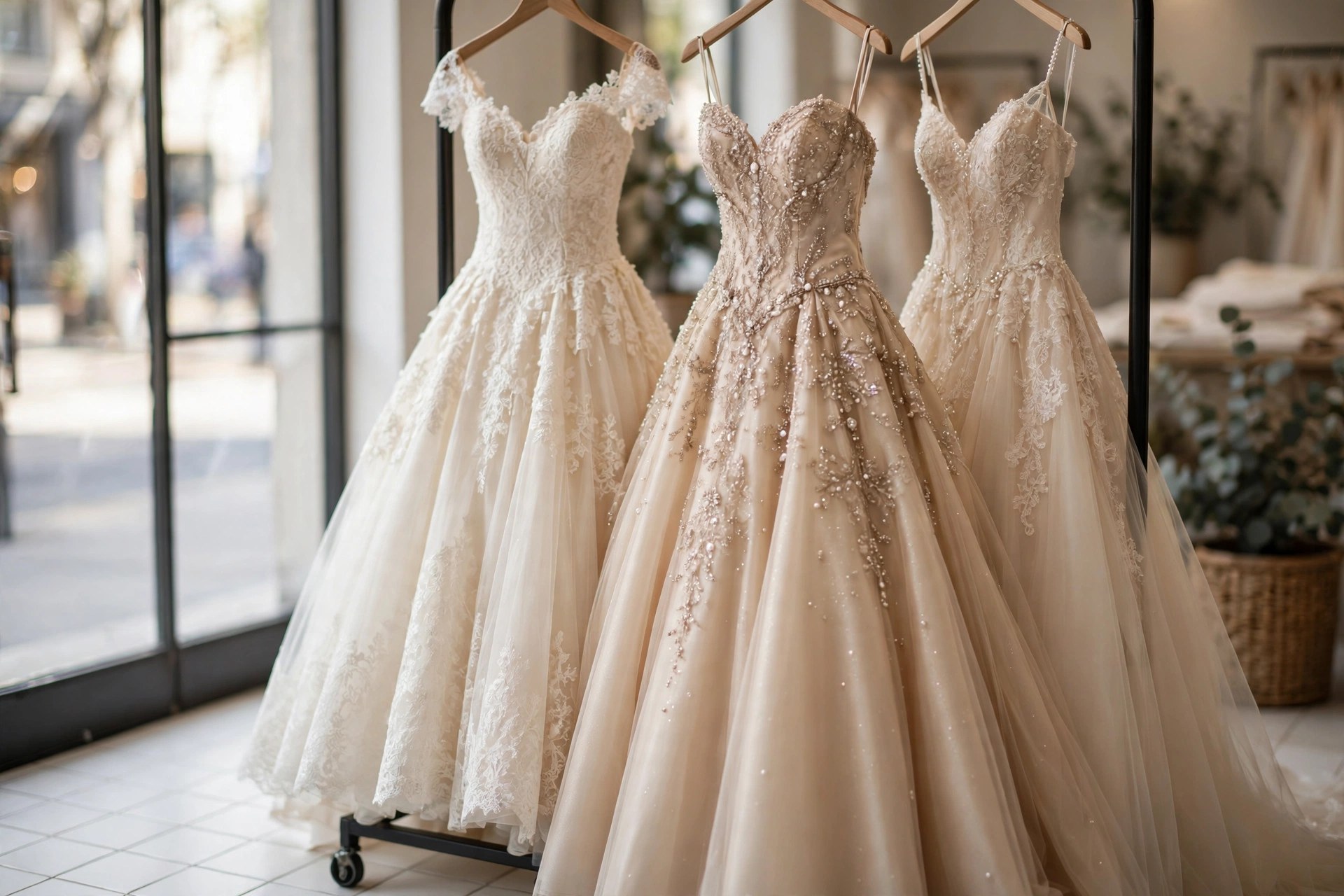
The platform data reads like my QC log with the serial numbers filed off. Same-category quinceanera dresses sit between one twenty and two eighty, ratings clustered at four point zero to four point five. The one-star keyword clusters lead with beads falling off, then flowers flattened in shipping, then zippers stuck on beading. The bead-loss complaints spike in reviews posted two to four weeks after delivery, which is exactly the lifespan of three anchor stitches. Nobody wrote “the workshop machine-tacked the flowers.” They wrote “beads falling off,” which is the same thing in customer language.
The factory side says the gowns passed the tug test. The buyers say the beads shed. Both are telling the truth about different gowns. The sample passed. The bulk was spot-checked, one in twenty, before the steam press. That contradiction is the whole article, really. The nine hours existed once, on the sample table, and everyone in the chain has been describing that one gown ever since.
Peak ordering runs January through April for the summer quince season, and anything placed after April carries a rush premium of twenty to thirty percent. The rush premium buys speed. It does not buy stitches. If anything the stitch count falls further in a rush, because the beading line goes to ten- and twelve-hour days and piece-rate hands move faster by doing less per flower. I have watched the calendar do more damage to 3D floral ball gown beadwork than any bad workshop ever did.
A beaded princess gown at this price is not a scam. It is a negotiation where one side did not know what was being negotiated. The buyer thought she was buying the sample. The workshop thought it was selling three stitches and a photograph. For buyers working wholesale formal dress orders outside the bridal houses, the lesson is the same one the quinceanera dresses market teaches every spring. And the appliqué formal dresses that hold up are the ones where somebody counted the stitches before the carton closed, not after the reviews came in. Even the evening ball gowns with heavy beadwork live or die on the same count.
Questions buyers ask too late
6 to 9 hours of hand beading per gown. So why did the beads fall off in week two?
Because the beaded princess gown you received got about forty minutes of beading, not nine hours. The sample was hand-sewn at twelve stitches per flower. The bulk was machine-tacked at three. Three stitches hold through the photo shoot and the first fitting, then the thread takes the weight of the beads every time the dress moves. The check buyers never ask for is the stitch count, because the tech pack says “hand-finished” and everyone reads what they want to read.
$180 wholesale for a beaded quince gown. Where did the beading hours go?
They were never in the price. At one eighty wholesale for quinceanera dresses, the workshop has room for machine tacking and pre-beaded flowers bought by the hundred, not nine hours of handwork. The beading hours went into the sample, which is the only gown anyone ever truly hand-beads. I stopped asking whether a price includes hand beading a long time ago. I ask how many stitches per flower now, and I watch what happens to the conversation. The honest workshops answer with a number. The others change the subject.
The sample passed the tug test. The bulk failed it. What changed?
The sample got a three-kilo pull on every flower cluster; the bulk got a spot check, one gown in twenty, and the spot check happened before the steam press, which is where dyed beads bleed and weak stitches let go. Nothing about the bulk was tested the way the sample was. The sample is a promise the bulk was never set up to keep, and the April phone calls are the interest on that promise.
I still do the rub test on every lot, and I still count stitches on the inside of the bodice, and every April I still hear about the beads. What I don’t know, after all these years, is whether showing the buyer the stitch count up front would have changed the price, or just changed which workshop got the order. Somebody always says yes at one eighty. The nine hours go somewhere. They just don’t go into the 3D floral ball gown.