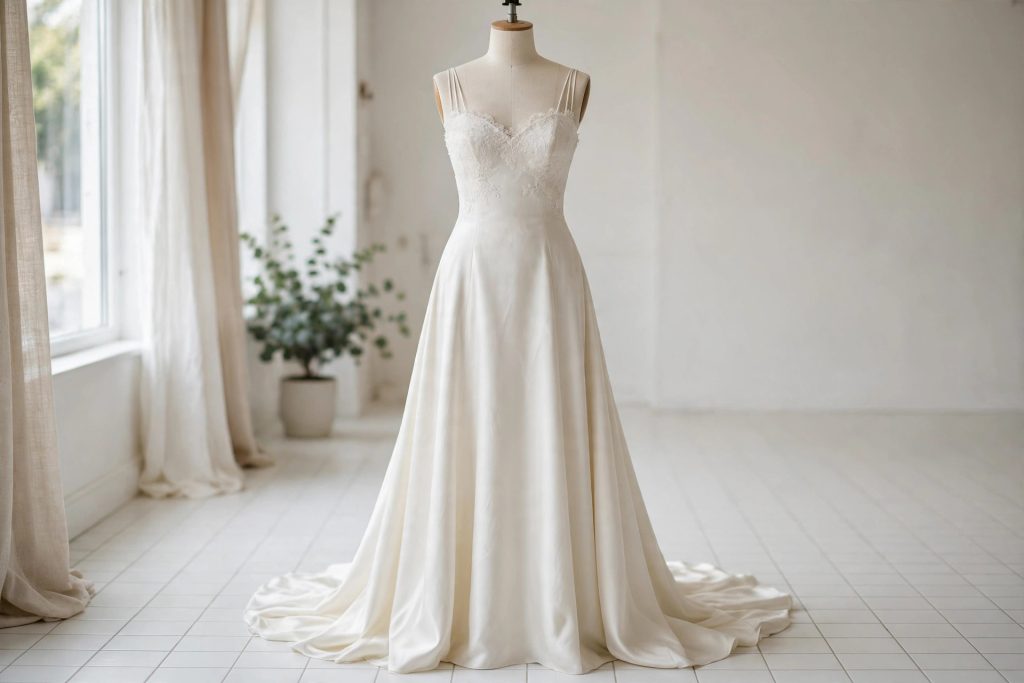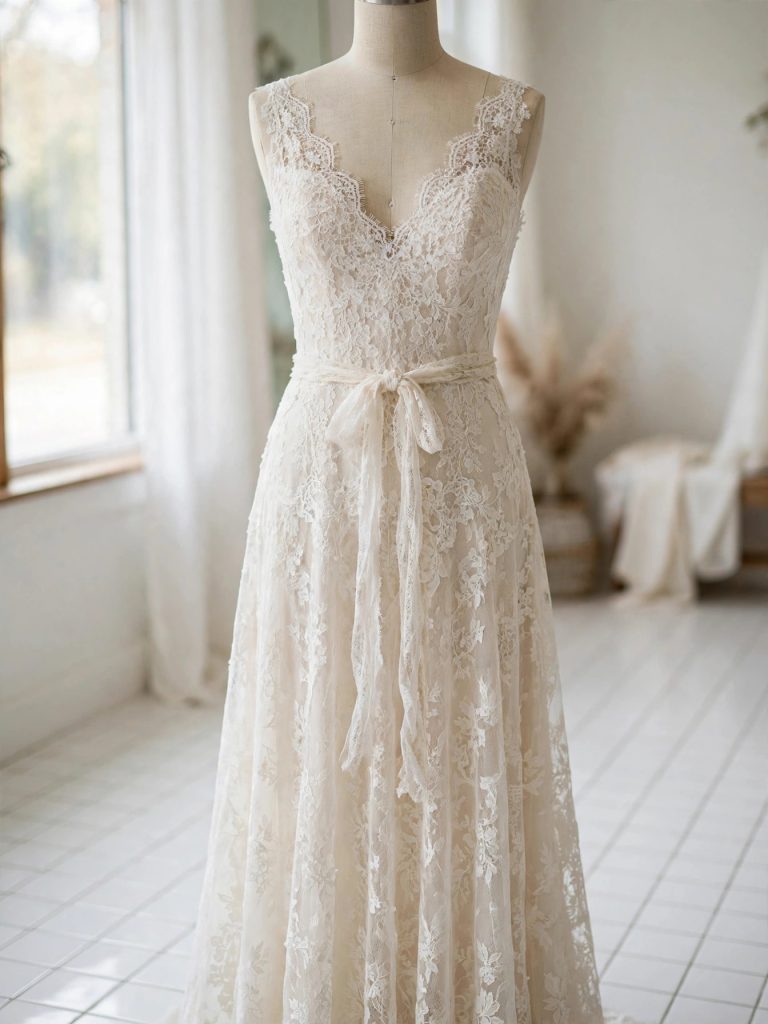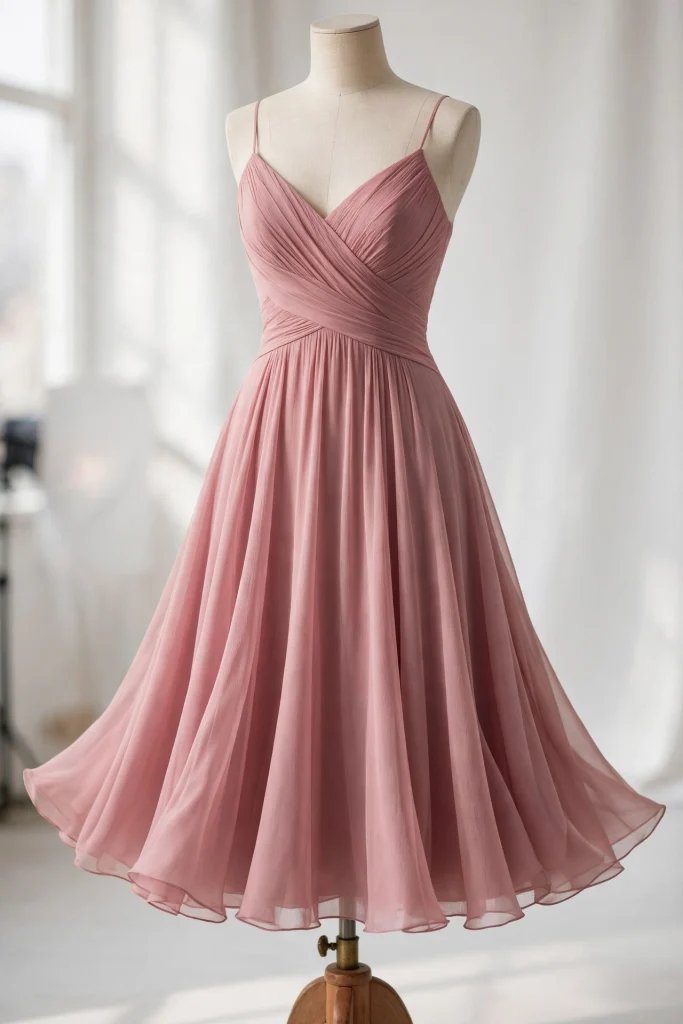
310. That is the grams per square meter I want to see before I will call a ponte knit a formal dress fabric. Most of the rolls sold as ponte in this market land at 220, maybe 240 if the buyer is paying attention and the supplier is having an honest day. Sixteen years I have been selling fabric from the same stall, and the Memoriesea women’s swing A-line formal dress is made from exactly the kind of knit that keeps my phone ringing.
The complaint I hear, from garment factories, from boutique buyers, from everyone downstream of my counter, is always the same sentence. “The fabric feels cheap.” And every time I want to ask what they expected, because they bought the 220-gram roll to save eleven cents a yard and then they are shocked when the dress sews up like a 220-gram dress.
Hmm.
I don’t take sides. The mill sells what the market asks for, the buyer buys what the budget allows. But I have watched this exact disappointment play out with swing A-line dresses for a decade, and the script never changes. Thin knit, big skirt, gravity wins.
My phone rings the most in March and September, right before the wedding seasons, and it is always the same question in different words. A boutique buyer wants to know if the swing a-line formal dress she is about to order will behave. I tell her what I know about the roll, which is sometimes a lot and sometimes nothing, because by the time the fabric reaches my stall the mill’s promises have already been laundered through two middlemen. She orders anyway. They almost always order anyway.
Some factories are cheating, sure. But mostly it is simpler than that. “Ponte” has become a word that means whatever the seller needs it to mean that morning, and nobody at the buying end checks, because checking would slow down an order that everyone wants to place.
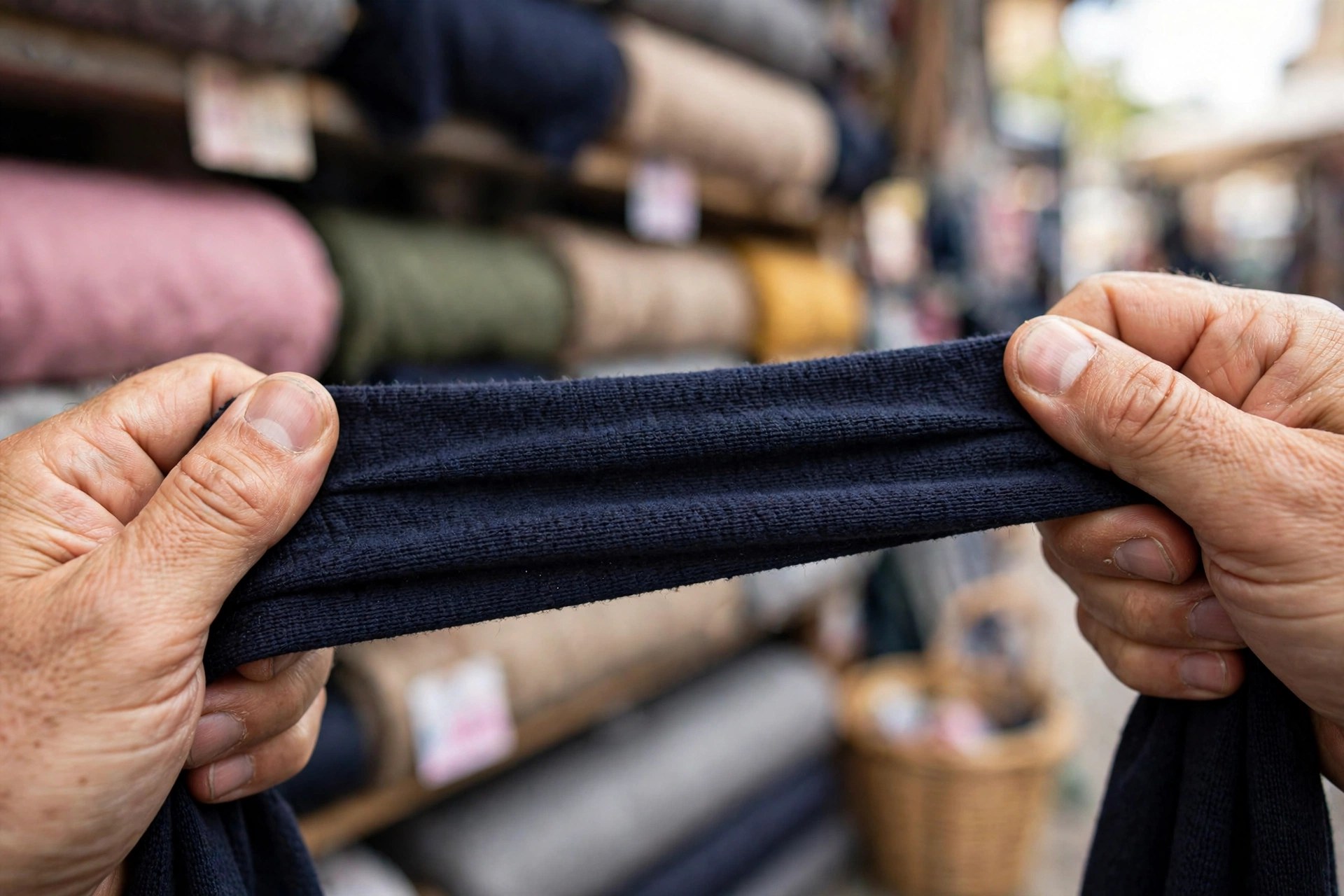
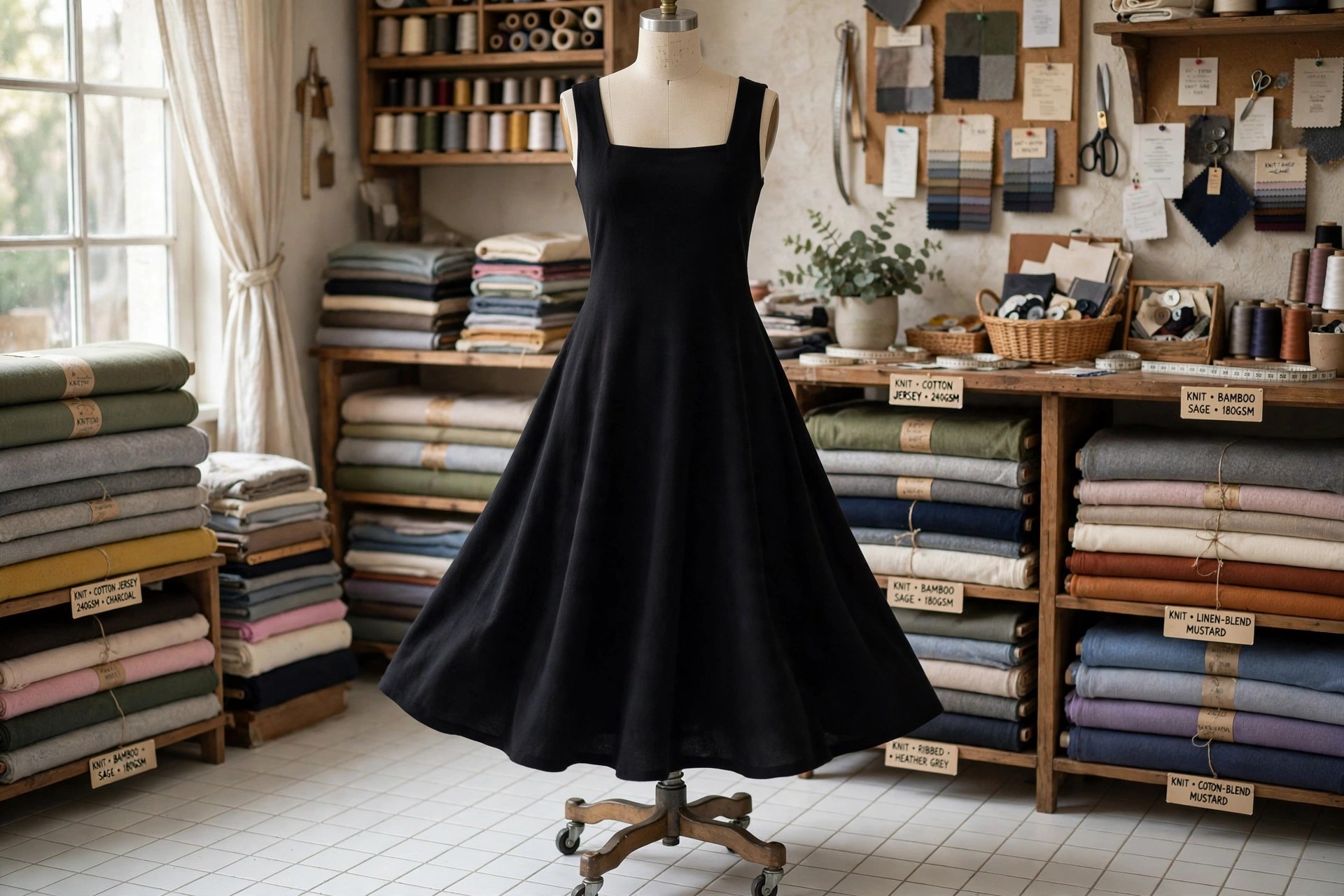
Here is what the Memoriesea dress needs from its fabric, since the silhouette is doing all the work. A swing A-line formal dress stands or falls on drape and recovery. The knit has to fall clean from the square neckline without clinging, and it has to snap back after sitting, after washing, after a long dinner. The product description says “stretchy ponte” and “flattering fit,” and both of those are true on day one with almost any knit. Day thirty is the test, and day thirty is the part nobody photographs.
The detail I would check before ordering ten pieces is the spandex content and the stitch density. A real ponte has a tight interlock construction you can feel between your fingers, two faces that look almost the same. The cheap version is a single jersey pretending, and a single jersey will grow a size by evening. Hold it up to the light. If you can read through it, it is not formal. It is a T-shirt that wants to be a dress.
The Texas Buyer and Her Black Dresses
A buyer from Texas, boutique owner, orders twice a year, always pays on time, once asked me why her black swing dresses faded faster than her navy ones. I told her the black dye on cheap poly takes three more rinses at the mill, which most mills skip, so the color crocks from day one. She didn’t believe me.
Whatever.
Two seasons later she switched to a 300-gram interlock from a different supplier, paid nineteen cents more per yard, and her return rate on fading dropped to almost nothing. That nineteen cents is the whole story of this business. It is the same math behind the Memoriesea dress. The difference between a wedding guest dress that looks expensive and one that looks cheap is usually decided at my counter, before a single stitch is sewn, in a decision the end customer never sees.
People ask me which colors to order, and I always say the same thing. Black hides everything, which is why the Memoriesea swing a-line formal dress sells best in black, and why black is also the color where dye problems hide the longest. A navy or a burgundy will show you a bad dye lot in one wash. Black keeps its secrets for three washes, and by the third wash the return window is closed and the boutique eats it. If you are testing a new supplier, order the lightest color they offer. The light colors can’t lie.
Shrinkage, the Number Nobody Asks About
On a ponte with spandex, shrinkage should be under three percent. The cheap rolls come in at five or six, which means your size medium becomes a size small after two hot washes. I keep a shrinkage ruler at the stall, a little metal thing, cost me twelve yuan, and I offer to test any roll before the buyer commits. Maybe one buyer in twenty takes me up on it. The rest trust the supplier’s word, which is worth exactly what they paid for it.
I used to say GSM was everything. No wait. That is what I told new buyers in my first five years, and it is wrong, or at least incomplete. A 280-gram knit with bad recovery will bag at the knees while a 240-gram with good spandex holds its shape, and I have felt both with my own hands. Weight is the easiest thing to measure, so buyers fixate on it. The things that actually matter, yarn quality, dye process, finishing, are invisible until they fail. Whether the Memoriesea factory uses a decent spandex supplier, I honestly don’t know. That is the garment factory’s business, not mine. I sell the cloth.
The Mill Rep and His Premium Ponte
A mill rep came by last week pushing a new “ponte” at 230 grams, priced like it is 300, and he used the word “premium” four times in two minutes. I didn’t order it. My neighbor did, and he is selling it fine. Sixteen years of feeling fabric between my fingers has given me a stubbornness I can’t quite defend with numbers, and the older I get the less sure I am whether that is experience talking or just fear doing a good impression of experience.
The square neckline on the Memoriesea is doing quiet work, by the way. On a knit with real recovery it sits flat all evening. On a tired single jersey it starts to gape by dessert, and there is no fixing that with a stitch. It is a fabric problem that looks like a pattern problem, and I have watched pattern makers get blamed for it more times than I can count.
The swing skirt is where gravity collects its debts. A 220-gram knit cut into a full swing will grow. Not maybe. It will. By evening the hem sits an inch lower than it did in the morning, and the customer thinks the dress is too big when the dress is just too light. This is the one I explain most often, and the one nobody believes until it happens to them, usually in a wedding guest dress they bought for one specific Saturday.
The ugly tests are boring and nobody does them, which is why I keep doing them. One dress goes through a hot wash. Another gets sat in for an hour while I do the accounts. The waistband gets stretched fifty times, and I count out loud because it annoys the neighbor’s apprentice. Boring. Everybody should.
Why Buyers Reorder a Dress They Complain About
A boutique owner from Florida calls me every March. Every March she complains about the same swing a-line formal dress, the hem growing, the black fading, the whole list. And every April she orders it again. I asked her once why, and she said her customers buy it anyway, because at that price nobody expects a wedding guest dress to last, and the margin covers the returns twice over. She wasn’t happy about it. She was just doing the math out loud, and the math didn’t care about my feelings on fabric.
The math is uncomfortable but it explains half the wholesale rack. A swing a-line formal dress that retails under thirty dollars doesn’t need to survive the season. It needs to survive the photograph, the event, and maybe one wash. The boutique knows this. The customer knows this, even if she won’t say it at the register. The only person pretending otherwise is the listing copy, and listing copy pretends for a living. I have made my peace with this, mostly. Mostly.
I don’t love this logic, but I can’t argue with her reorder rate either. The Memoriesea swing a-line formal dress keeps selling because the silhouette is forgiving and the price is lower than the alteration bill on a real formal dress. My nineteen-cents-a-yard lecture doesn’t land when the margin math already closed the deal. So I sell her the better roll when she asks, and the cheap roll when she doesn’t, and I try not to think too hard about which one of us is right. Sixteen years, and I still haven’t settled it.
The midi length is doing half the selling, by the way, and nobody talks about it. A swing A-line formal dress that hits mid-calf flatters almost every height, which is why the a-line cocktail dress section of any boutique rack turns over faster than the minis or the maxis. The catch is the hem. On a knit that grows, a midi becomes a maxi by August, and there is no elegant way to explain that to a customer. I have seen boutiques quietly re-hem returns and put them back on the rack. I pretend I didn’t see it. They pretend they didn’t do it. The dress pretends nothing happened.
And before you scale, read the women’s dresses wholesale guide on this site, because it covers the jump from sample to bulk better than I can. The real landed cost of wholesale dresses piece is worth your time too, since the fabric is only half the number. Freight, duty, and the returns you didn’t plan for are the other half. The comparison of pleated, wrap and A-line skirts is worth a look as well, because the A-line’s advantage is all in the cloth, which brings us back to my counter.
Frequently Asked Questions
310 GSM ponte for under $30 retail. What am I actually buying?
You are buying the cheapest knit that can still be called ponte without anyone laughing. At that retail price the mill roll was probably 220 grams, maybe 240, with the minimum spandex that still stretches on the hanger. It will look right for the first month. The honest version is that you are buying thirty days of a good-looking swing A-line formal dress, and after that you are buying lessons. I don’t mean that as an insult. The lessons are real. I just wish they cost less than they do.
My black swing dresses faded in two washes. The navy ones didn’t. Why?
Black dye on cheap polyester needs three more rinses at the mill, and most mills skip them to save the water and the time. The navy got its rinses because navy shows uneven dye faster, so the mill couldn’t skip without getting caught. Your black dresses were under-rinsed from birth. Wash one in hot water before you order bulk, and if the rinse water looks like ink, walk away from that supplier. I learned this from a Texas buyer who didn’t believe me either, until her return rate told the story for her.
Under 3% shrinkage is the spec. My medium became a small. What happened?
The spec was written for the roll they sent to the lab, not the roll they shipped to you. Cheap ponte with weak spandex comes in at five or six percent, and two hot washes will take a medium down to a small without any drama. I keep a twelve-yuan shrinkage ruler at my stall and almost nobody asks to use it. The test takes ten minutes. The returns take a season, and they take it out of your margin, not the mill’s.
The sample draped perfectly. The bulk clings. Same factory, what changed?
The roll changed. Samples get cut from the good end of the inventory, sometimes literally from a different roll than the bulk, and a 240-gram interlock drapes nothing like a 220-gram jersey. The factory didn’t necessarily cheat you. They bought what the price allowed, and the price allowed less than the sample did. This is why I tell buyers to keep a swatch of the sample fabric in a drawer. When the bulk of the a-line cocktail dress arrives, you put the two side by side, and the truth is usually visible without any instruments at all.
A-line hides everything. So why are all my returns about fit?
Because the A-line hides the body, not the fabric. When the knit bags at the waist or the neckline gapes, there is no seam or dart to blame, so the customer blames the fit. The fit was fine. The cloth gave up. A formal dress wholesale buyer once told me her A-line returns dropped by half when she switched mills, same pattern, same factory. Nothing about the fit changed. Everything about the fabric did, and she still sounds annoyed about it when she tells the story.
The rep will be back next Tuesday. He always comes back. And I will probably still say no, and I will probably still wonder, on the slow afternoons, whether “no” is wisdom or just habit.