Short answer: When your wedding dress order is delayed, get the new delivery date in writing, ask the factory for dated photos of work in progress, negotiate a revised milestone schedule — and protect the balance payment until the goods pass inspection. Most production delays are planning failures, not scams, and a factory that admits a delay early is usually more trustworthy than one that promises “no problem” until the day before shipping.
If you run a bridal boutique or a wedding dress brand, a delayed bulk order is one of the most stressful moments in the business: brides have fittings booked, your season calendar is fixed, and the factory is an ocean away. This guide explains why wedding dress orders actually get delayed (from the factory floor’s point of view), how to tell a two-week hiccup from a real crisis, and exactly what to do in each case.
Why Do Wedding Dress Orders Get Delayed? The 6 Real Causes
Most delays come from six causes, and only one of them is the factory simply being careless. Knowing which one you are dealing with decides your response.
1. The fabric clock started later than you think
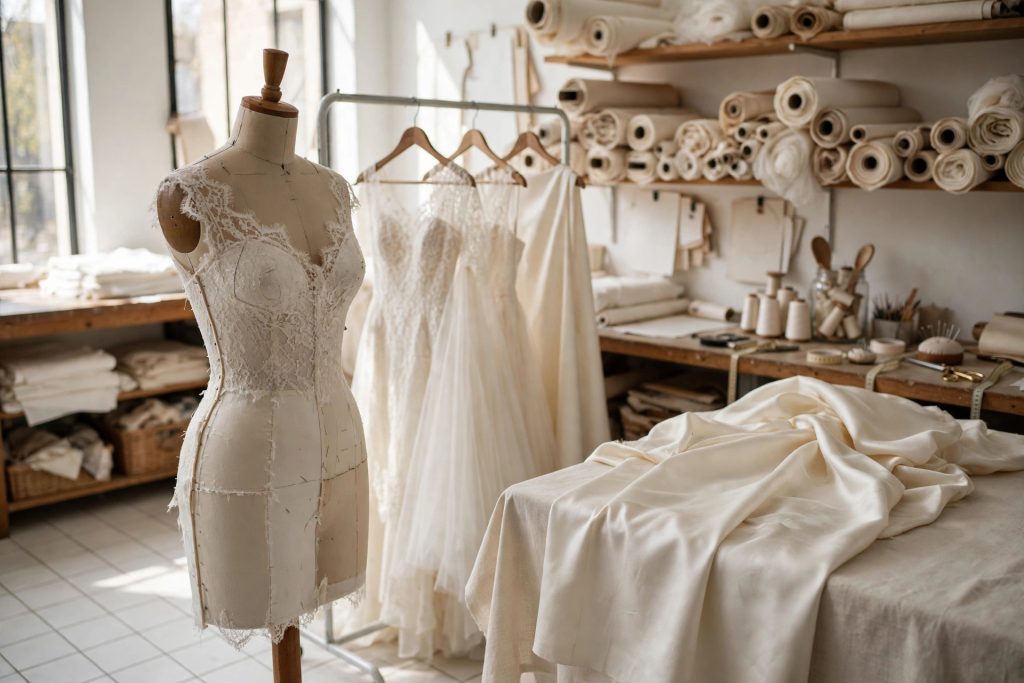
The single most misunderstood part of a wedding dress timeline is fabric. If your gowns use a custom-dyed satin, a specific lace, or a particular shade of tulle, the fabric mill needs 15 to 30 days to produce and dye it — and that clock only starts after you confirm the color. Many buyers count their lead time from the deposit date, but the factory cannot cut a single panel until the fabric arrives. If you spent three weeks choosing between two shades of champagne, that was three weeks of your timeline, not the factory’s.
2. Hand-beading and embroidery are the hidden bottleneck
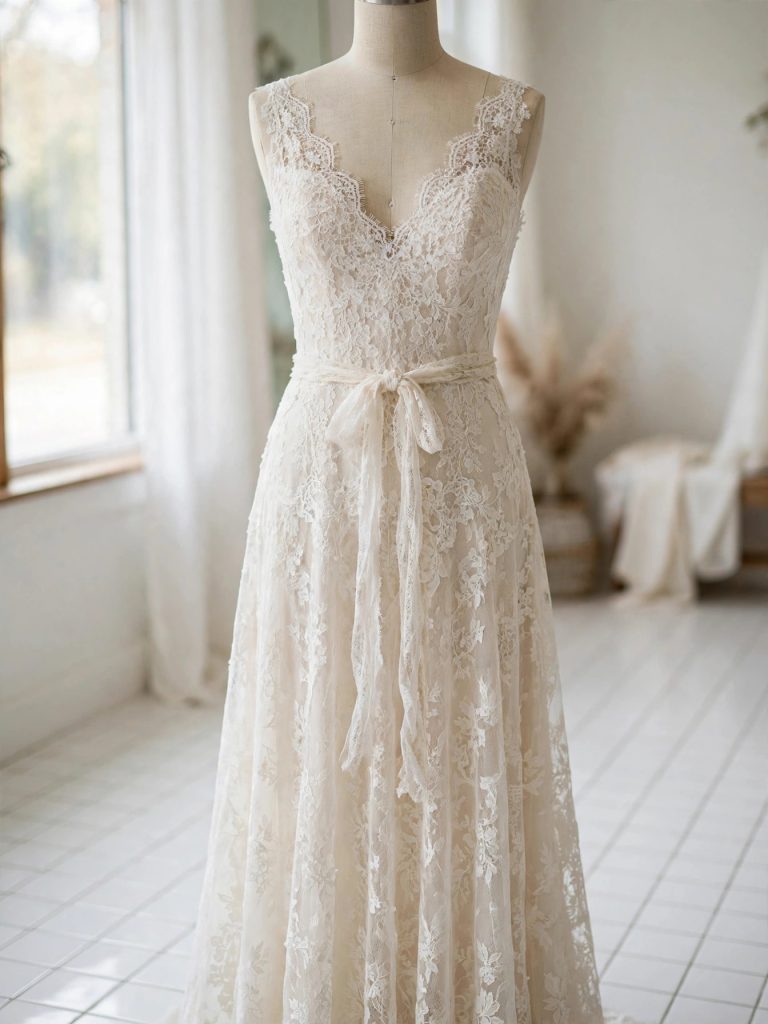
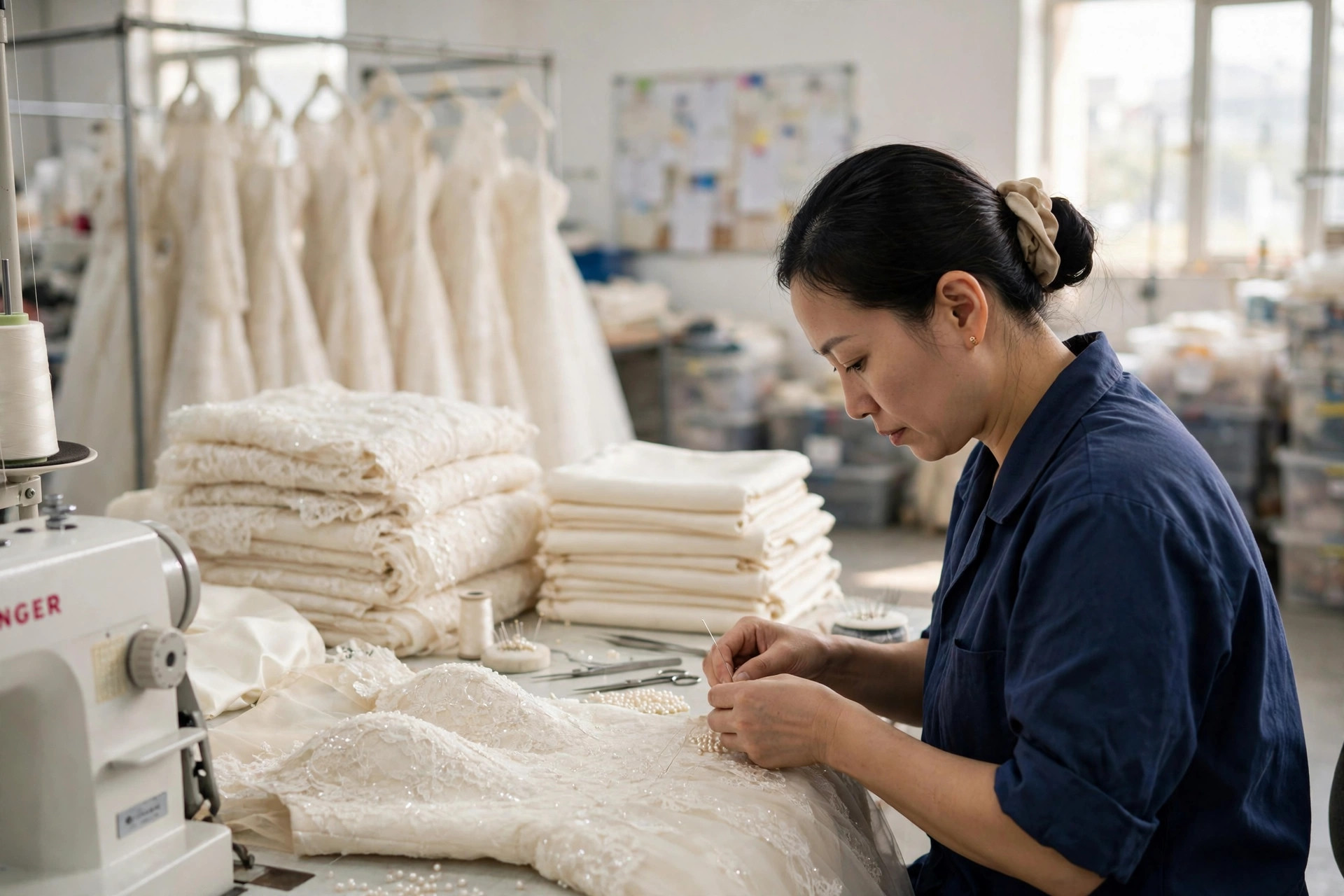
This is the cause factories explain worst and buyers underestimate most. A heavily beaded bodice can take one skilled worker two to three full days. Multiply that by fifty gowns and one beader is occupied for two months. Unlike cutting or straight sewing, beading cannot be sped up with machines — it is handwork, and rushing it is how beads start falling off in the fitting room. If your order is beading-heavy, your real timeline was always the beading queue, not the sewing line. (Our custom wedding dress manufacturing process guide breaks down where the labor hours actually go in each gown.)
3. Peak season: your order is sharing the factory
Bridal has a brutal seasonal rhythm. Factories are typically at full capacity from October through February producing for the spring wedding season. During those months your order is not the only one on the floor — it is one of many, and every client believes their deadline is the most urgent. Orders placed in peak season without an explicit production slot reservation are the ones most likely to slip.
4. The PP sample approval came late
The pre-production (PP) sample is the final green light before bulk cutting — fabric, fit, construction, labels, and packaging all confirmed in one garment. Here is what buyers miss: the bulk production clock starts at PP approval, not at order placement. If the PP sample took two rounds of corrections and three extra weeks, your shipment is three weeks late before a single bulk gown is sewn. Late PP approval is one of the most common reasons a “promised” delivery date quietly becomes impossible.
5. Design changes after cutting began
Changing a neckline, swapping a zipper for a corset back, or adding sleeves after bulk cutting has started does not “just take a few extra days” — it restarts the affected panels from zero, and the already-cut pieces become waste the factory absorbs. Every mid-production change should come with a written revised delivery date. If it does not, assume the original date is dead.
6. Trims, labels, and packaging held everything up
It sounds absurd until you have lived it: fifty finished gowns sitting in cartons, unshippable, because the woven labels or the care labels were confirmed two weeks late. Main labels, hangtags, polybags, and carton marks are small items with their own suppliers and their own lead times. Confirm them early — they decide whether finished garments can actually leave the building.
How Serious Is Your Delay? Diagnose It in One Email
Not every delay is a crisis. The difference between a manageable slip and a real problem usually shows up in how the factory answers one direct email.
Write to your contact (not a chat message — email, so there is a record) and ask four specific questions:
- What is the exact new ex-factory date, in writing?
- What specifically caused the delay — fabric, beading, capacity, or something else?
- Can you send dated photos of the work in progress this week?
- What is the recovery plan: overtime, added workers, or a partial shipment?
A factory that answers all four concretely — a date, a cause, photos, a plan — is managing the problem, and a one-to-three-week slip from a factory like this usually resolves. A factory that answers vaguely (“soon,” “no problem,” “next week” repeated for a month), dodges the photo request, or whose salesperson, merchandiser, and production manager each give you a different story — that is the pattern to worry about. Inconsistent explanations across different people inside the factory are one of the most reliable early warnings that the real situation is worse than what you are being told.
One more rule of thumb: a delay announced early, with a cause and a new date, costs you far less than a delay discovered late. Ask for a dated production photo every two weeks on every order — it takes the factory two minutes and it is the cheapest early-warning system in this business.
What to Do Right Now: A 5-Step Recovery Plan
Once you have the diagnosis, work this plan in order.
Step 1: Get the revised date in writing, tied to milestones. Do not accept “about two more weeks.” Ask for a short milestone schedule: fabric ready by X, cutting done by Y, sewing output per day, packing by Z. A factory that can commit to milestones has a real plan; a factory that cannot is guessing.
Step 2: Protect your balance payment. The standard structure — deposit up front, balance before shipment — is your main leverage. Never release the balance before the goods pass your pre-shipment quality inspection. If the factory pressures you to pay the balance while the goods are still unfinished, that is a red flag, not a normal request.
Step 3: Ask about a partial shipment. If half your gowns are finished and the rest are stuck in beading, shipping the finished half now can save your season. You will pay freight twice, but a partial shipment that arrives beats a complete shipment that misses every fitting appointment. Do the math: compare the extra freight against the cost of empty fitting rooms.
Step 4: Price the air-freight escape hatch honestly. Air freight is sometimes the rational choice — but calculate it per gown against your retail margin first. A $400 gown retailing at $1,800 can absorb emergency air freight; a $120 gown often cannot. Run the numbers before you panic-book cargo space.
Step 5: Document everything, stay professional. Keep every revised date, every promise, and every photo in one email thread. If the relationship survives — and most do — this record becomes the basis for better terms next time. If it does not, it is the evidence you need. Either way, anger gets you nothing; a paper trail gets you options.
How to Keep Delays From Happening on Your Next Order
The uncomfortable truth is that most delays are preventable, and the prevention happens before you place the order — which is why buyers who vet their manufacturer properly get burned less often.
Four practices separate buyers who rarely face delays from buyers who face them every season:
Order earlier than feels necessary. For spring season gowns, experienced bridal buyers place bulk orders in late summer or early autumn — not because production takes that long, but because the buffer absorbs the fabric clock, the PP sample rounds, and one round of “something unexpected.” A 30-day buffer you never need costs nothing; a 30-day delay you did not plan for can cost a season.
Put a late-delivery clause in writing. A common formulation is a small percentage of the order value deducted per week of delay, capped at an agreed maximum — negotiated when you review the factory quotation, not after the delay happens. The point is not to collect the penalty; it is to make the delivery date a contractual commitment instead of a friendly estimate.
Confirm trims and labels with the PP sample. Treat labels, hangtags, and packaging as part of the PP approval, not as an afterthought. If your labels are not confirmed when bulk production starts, you have built a delay into the order on purpose.
Ask about the beading queue before you order beaded gowns. This one question — “how many beaders will work on my order, and what is the current queue?” — tells you more about your real delivery date than any quoted lead time. If the factory cannot answer it, the quoted date is a guess.
Stay or Walk Away? How to Read the Pattern
Here is the original conclusion most guides will not give you: a single delay, honestly communicated, is not a reason to change factories — repeated vague delays are.
Every factory misses a date sometimes. Fabric mills run late, workers quit mid-season, a pandemic-era shipping backlog echoes for years. What matters is the pattern. A factory that tells you in week three that beading will push delivery by two weeks, sends photos, and hits the revised date is a factory you can plan around — that is reliability, even with a delay in the middle. A factory that says “no problem” for six weeks and then goes quiet for ten days is telling you, through its behavior, that its word cannot be scheduled against.
The practical test: after a delay, does the next order get a more conservative quoted lead time and tighter milestone updates? If yes, the factory learned something and your relationship got stronger. If the next quote is just as optimistic and the communication just as vague, you are not in a partnership — you are in a lottery. Start qualifying a backup factory while this order finishes. You do not need to fire anyone in anger; you need two reliable suppliers instead of one unreliable one.
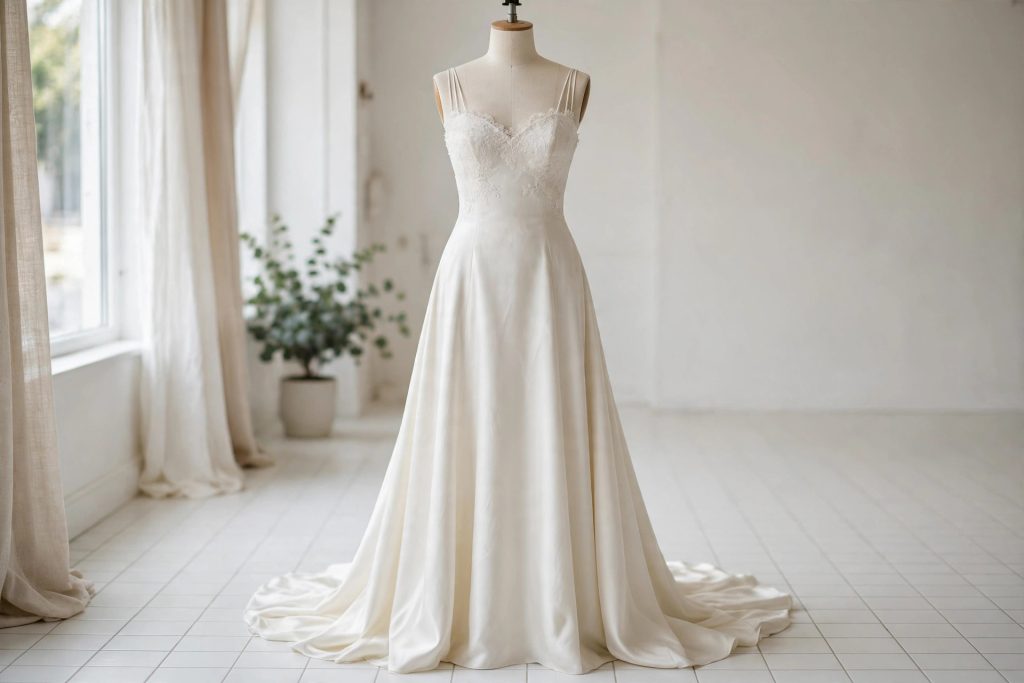
For bridal boutique owners building a wholesale program, the most delay-resistant designs are worth knowing too: simpler constructions — clean satin wedding dresses with minimal handwork, for example — move through production far more predictably than heavily beaded or multi-layer lace gowns. Many successful boutiques balance their buys: statement beaded gowns for the showroom wow factor, backed by a core of simpler styles that always arrive on time.
Frequently Asked Questions
What is a reasonable production lead time for wholesale wedding dresses?
For standard bulk orders, 60 to 90 days from PP sample approval to ex-factory is typical; heavily beaded or complex lace gowns can run 90 to 120 days. Add 15 to 30 days if custom-dyed fabric is involved, plus ocean freight time. Any quote far shorter than this deserves a hard question about which step is being skipped.
Should I ask for compensation when my order is delayed?
Yes, if you agreed on a late-delivery clause before production — that is what it is for. Without a written clause, you can still negotiate in good faith: a discount on the current order, upgraded shipping at the factory’s cost, or better payment terms on the next order. What rarely works is demanding compensation aggressively with no contractual basis; it usually just ends the relationship.
Can I cancel a delayed wedding dress order and get my deposit back?
It depends on your contract and how far production has gone. If the factory has already bought fabric and cut panels, the deposit is typically consumed by materials and labor already spent — canceling usually means losing it. This is why milestone-based payments and a written delivery clause matter more than cancellation rights: they give you leverage while the order is still alive, which is when leverage actually helps.
How do I check whether a delayed factory is telling the truth?
Ask for dated photos or a short video of your goods on the production line — specific to your styles, not stock photos. Consistent explanations across the salesperson, merchandiser, and production contact are another good sign. If the factory refuses visual proof and different people give different stories, treat the stated delivery date as unreliable and activate your backup plan.
Is it better to switch factories after a bad delay?
Not automatically. One honestly communicated delay is normal in garment manufacturing; a pattern of vague, repeated delays is not. Before switching, weigh the switching cost: a new factory means new PP samples, new fit approvals, and an untested relationship — often 4 to 6 weeks of calendar time. Many experienced buyers keep their existing factory for proven styles while qualifying a second factory for new orders.